
How to Upgrade Campus Recreation for Daily Use
Recent Posts
Selecting Turf Infill Materials for Saudi Sports
September 14, 2026
Best Padel Court Materials for Saudi Conditions
September 12, 2026
Best Outdoor Fitness Equipment for Saudi Sites
September 11, 2026
Riyadh Padel Flooring Options for Lasting Play
September 10, 2026
Share Post
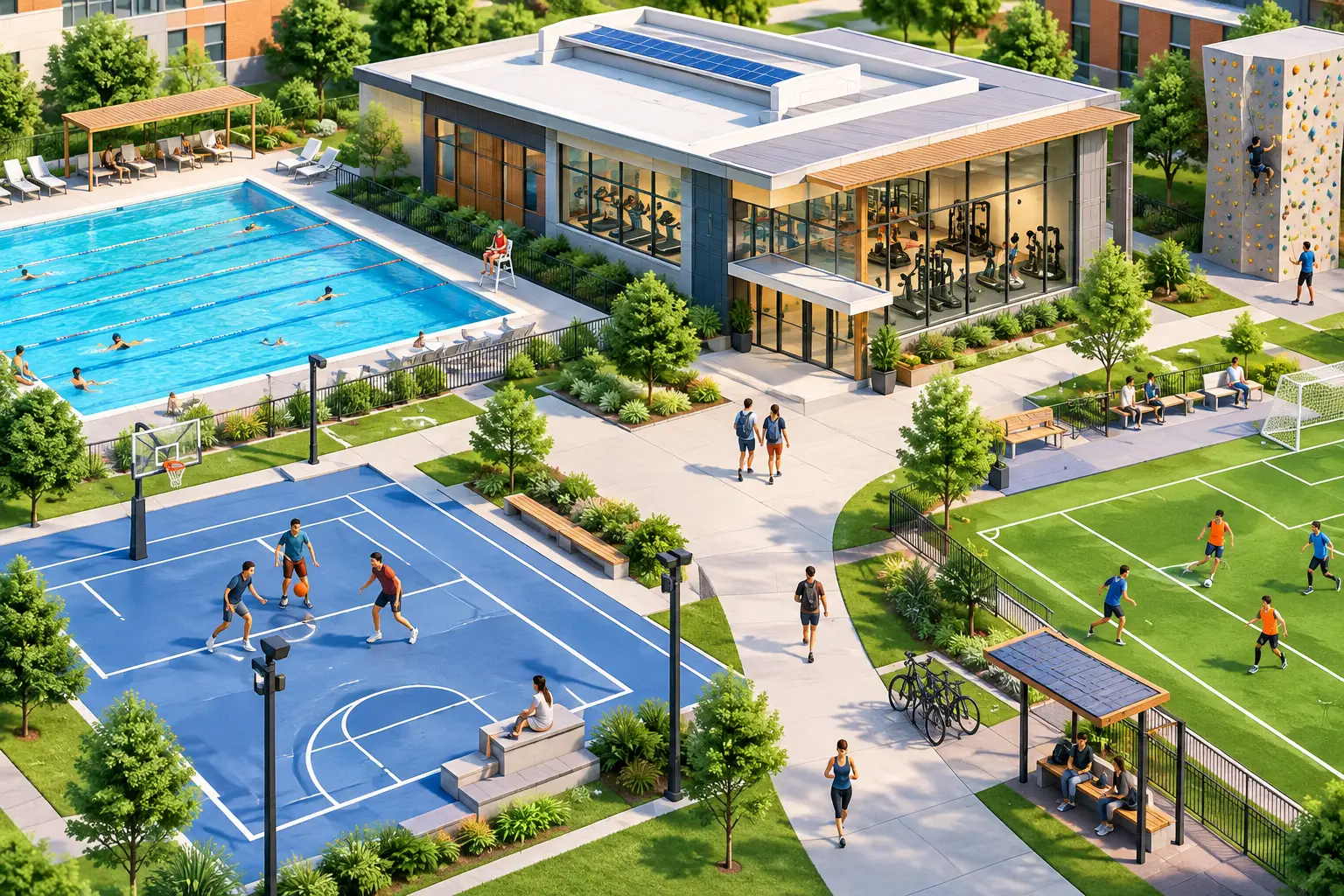
A campus court that sits empty at 4 p.m., a running loop with cracked edges, or a fitness area too exposed for comfortable use is not a minor maintenance issue. It is a missed daily asset. Knowing how to upgrade campus recreation means treating the campus as an active environment: one where students, staff, visitors, and residents can move safely, gather confidently, and use facilities throughout the academic year.
For universities, schools, corporate campuses, and large mixed-use developments in Saudi Arabia, the strongest upgrades do more than replace worn surfaces. They correct the reasons spaces underperform: poor heat management, limited programming flexibility, unsafe circulation, insufficient shade, and materials that cannot withstand heavy use. The objective is a durable recreational system that supports wellbeing, campus identity, and long-term operational value.
Start With How People Actually Use the Campus
The first question is not which court or surface to install. It is where activity already happens and where it fails to happen. Observe movement patterns before preparing a concept. Students may gather near an informal shaded edge rather than the existing sports court. Staff may walk around a site because there is no comfortable, connected loop. A basketball court may be popular after sunset but underused during the day because the surface and surrounding environment hold excessive heat.
A practical site assessment should review existing sports assets, pedestrian flow, drainage, accessibility, lighting, shade, adjacent buildings, maintenance history, and peak demand periods. It should also identify conflicts. A high-energy skate or pump track zone should not share circulation with a quiet study garden, while an outdoor fitness area benefits from being visible and close to common routes.
This assessment turns an upgrade from a product purchase into an operational plan. A compact campus may need flexible, multi-use space. A large university may need a connected network of specialized facilities. Neither approach is automatically better. The right decision depends on available land, the user profile, programming capacity, and the institution’s maintenance resources.
How to Upgrade Campus Recreation With a Clear Asset Strategy
Recreation upgrades perform best when each area has a defined role. A facility should answer a simple question: what type of movement or gathering does this zone make easier?
A multi-sport acrylic court can support basketball, volleyball, and general physical education within a limited footprint. A padel court may create strong social participation on a campus with adult users or residential components. Artificial turf can provide a forgiving, visually clean surface for small-sided football, informal activity, and recreation programming. Running tracks and walking loops support the broadest audience because they allow independent use without teams, bookings, or equipment.
Outdoor fitness areas add value when equipment selection, fall zones, surfacing, shade, and circulation are engineered as one system. They should not be treated as a collection of machines placed on a hard slab. EPDM rubber flooring or other appropriate impact-attenuating systems can improve safety and comfort, while a planned layout supports clear movement between stations.
The most successful campuses offer a mix of structured and unstructured recreation. Structured spaces include courts, pitches, and tracks with defined activity. Unstructured spaces include open turf, movement zones, seating edges, and shaded areas that invite casual use. A student who will not join a formal game may still use a walking loop, stretch beside a fitness zone, or spend time with friends near an active court. That wider participation is a meaningful return on the investment.
Design for Saudi Heat, UV Exposure, and Heavy Traffic
Saudi conditions place unusual demands on outdoor recreation assets. High temperatures, intense ultraviolet exposure, airborne dust, thermal movement, and repeated traffic can shorten the life of an improperly specified surface. A visually attractive finish at handover is not enough. The system must retain its play characteristics, drainage performance, color stability, and safe condition over years of use.
Material selection must be tied to the application. Acrylic sports court systems require sound base preparation, suitable coatings, and precision line marking for consistent play. Artificial turf requires appropriate pile construction, infill strategy where applicable, sub-base design, and drainage control. Rubber flooring needs a stable substrate, correct thickness, controlled installation conditions, and properly finished edges to avoid premature separation or trip hazards.
Sub-base and civil works deserve particular attention. Surface problems often begin below the finished layer. Settlement, poor falls, inadequate compaction, and uncontrolled water movement can lead to cracking, ponding, and costly repairs. A competent delivery team reviews site levels, drainage routes, curbs, containment, and structural requirements before surface installation begins.
Shade and lighting should be planned early rather than added as afterthoughts. Shade structures can improve comfort and extend usable hours, but their foundations, drainage implications, sightlines, and relationship to sports clearances require coordination. Sports lighting must deliver useful visibility without excessive glare, spill, or dark zones. When these elements are designed together, the result feels like a complete campus destination rather than a set of disconnected installations.
Build Safer Recreation Into Every Detail
Safety is shaped by more than signs and supervision. It begins with layout, surface selection, access, and construction quality. Courts need appropriate run-off zones and clear separation from vehicle routes. Walking paths should have predictable transitions and surfaces that remain manageable for a wide range of users. Fitness zones need impact-appropriate flooring and sufficient space around equipment. Skate parks and pump tracks require specialized geometry, controlled entry points, and construction methods capable of handling repeated dynamic loads.
Accessibility should also be embedded in the concept. This can include step-free routes, stable path connections, practical resting points, and recreational elements that welcome users with varying abilities. The exact solution depends on the site and relevant requirements, but the principle is consistent: campus recreation should expand participation, not create another barrier.
Specify quality controls as part of procurement. Certified material sourcing, trained installation teams, documented inspections, and acceptance testing protect the client from avoidable defects. A turnkey contractor with control over design coordination, civil works, surfacing, installation, and maintenance planning can reduce gaps between trades. That accountability matters most when a project includes several systems with different technical requirements.
Use Phased Delivery Without Creating a Patchwork Campus
Not every institution needs to rebuild its entire recreational offer in one capital cycle. A phased approach can protect budgets and keep key areas operational, provided the long-term master plan is established first.
A sensible first phase often addresses the highest-use or highest-risk assets: damaged courts, unsafe paths, failed turf, inadequate drainage, or an absent fitness offer. The next phase can add complementary facilities such as a running loop, shaded social zones, padel courts, or a youth-focused skate and pump track area. Later work can improve lighting, wayfinding, seating, landscaping, and maintenance access.
The risk is treating each phase as an isolated project. That can produce inconsistent materials, duplicated mobilization costs, uneven design quality, and circulation that never fully connects. Establishing surface palettes, drainage principles, lighting standards, accessible routes, and future utility provisions at the start allows the campus to grow with discipline.
For major education or destination developments in Riyadh, Jeddah, Dammam, or emerging locations such as Neom, phased delivery can also account for occupancy patterns and evolving demand. A new campus may initially need high-capacity flexible space. As the population grows, specialized courts and programmed activity zones can be added with confidence.
Protect Performance After Handover
A new facility is only as valuable as its condition after the first year of use. Maintenance planning should be part of the original scope, not a response to visible deterioration. Each surface system has different needs. Courts require cleaning, inspections, crack monitoring, and periodic recoating based on traffic and exposure. Turf requires grooming, debris removal, seam checks, and drainage reviews. Rubber flooring needs cleaning and inspections around edges, joints, and high-wear areas.
Operators also need a clear reporting route for defects, vandalism, drainage concerns, and lighting failures. Small interventions completed early are usually less disruptive and less expensive than major corrective work later. This is where a long-term delivery partner adds practical value. StepX Sports approaches recreation environments as engineered assets, with installation standards and lifecycle support suited to demanding Saudi outdoor conditions.
Measure success through usage as well as appearance. Track booking demand, informal use, maintenance calls, incident reports, and user feedback. If a court looks excellent but stays empty, the issue may be comfort, programming, access, or visibility rather than the surface itself. These observations guide the next investment with evidence rather than assumptions.
A campus recreation upgrade earns its value when movement becomes part of the daily routine, not a special event. Build for the heat, design for real behavior, and maintain every detail with discipline. The result is a facility that keeps inviting people back long after opening day.