
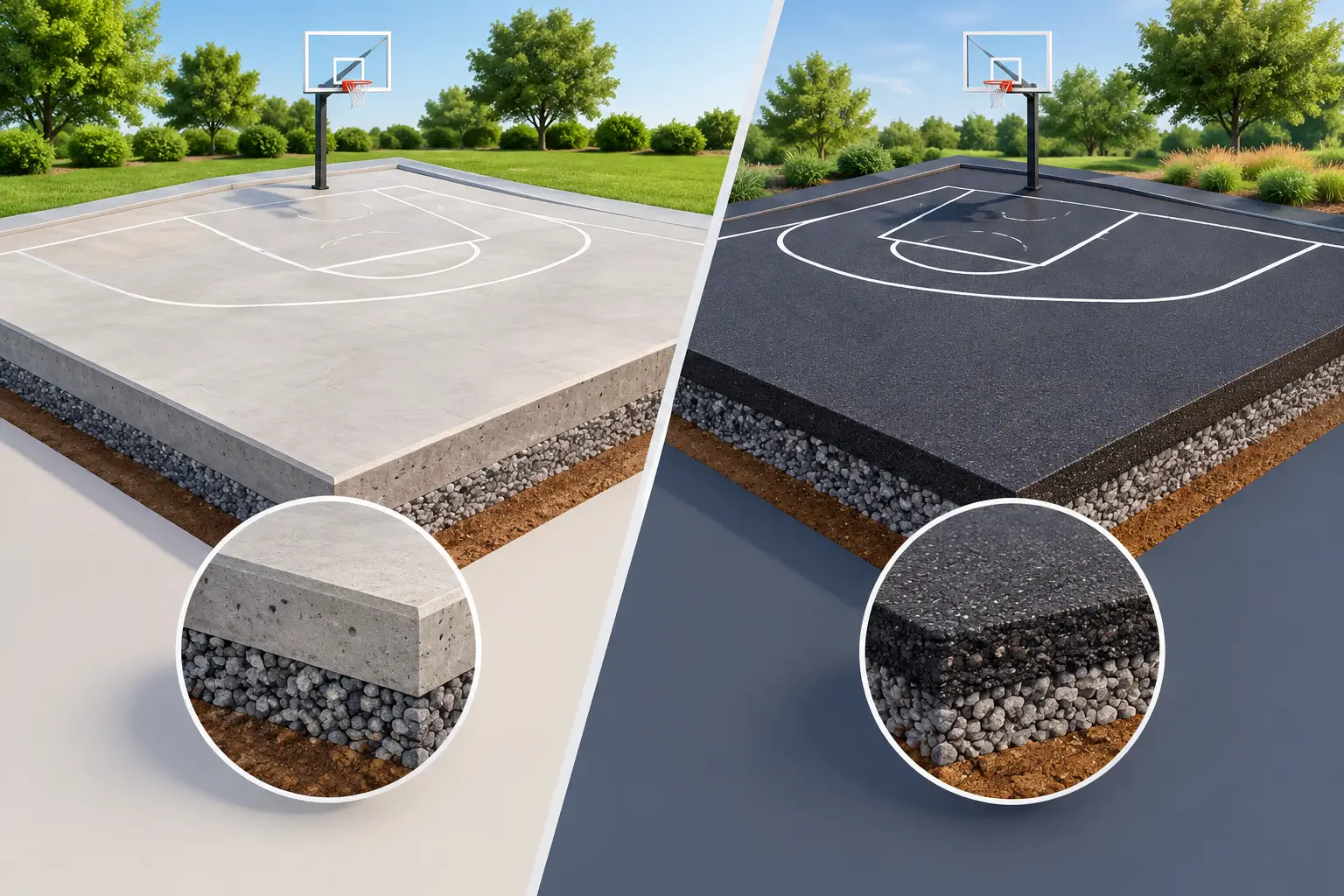
Municipal Park Revitalization That Lasts
Recent Posts
Adventure Parks Built for Saudi Conditions
November 1, 2026
Artificial Turf Dust: Causes, Risks, and Control
October 31, 2026
Acrylic Court System Review for Saudi Projects
October 30, 2026
What Drives Strong Padel Court Profitability?
October 29, 2026
Share Post
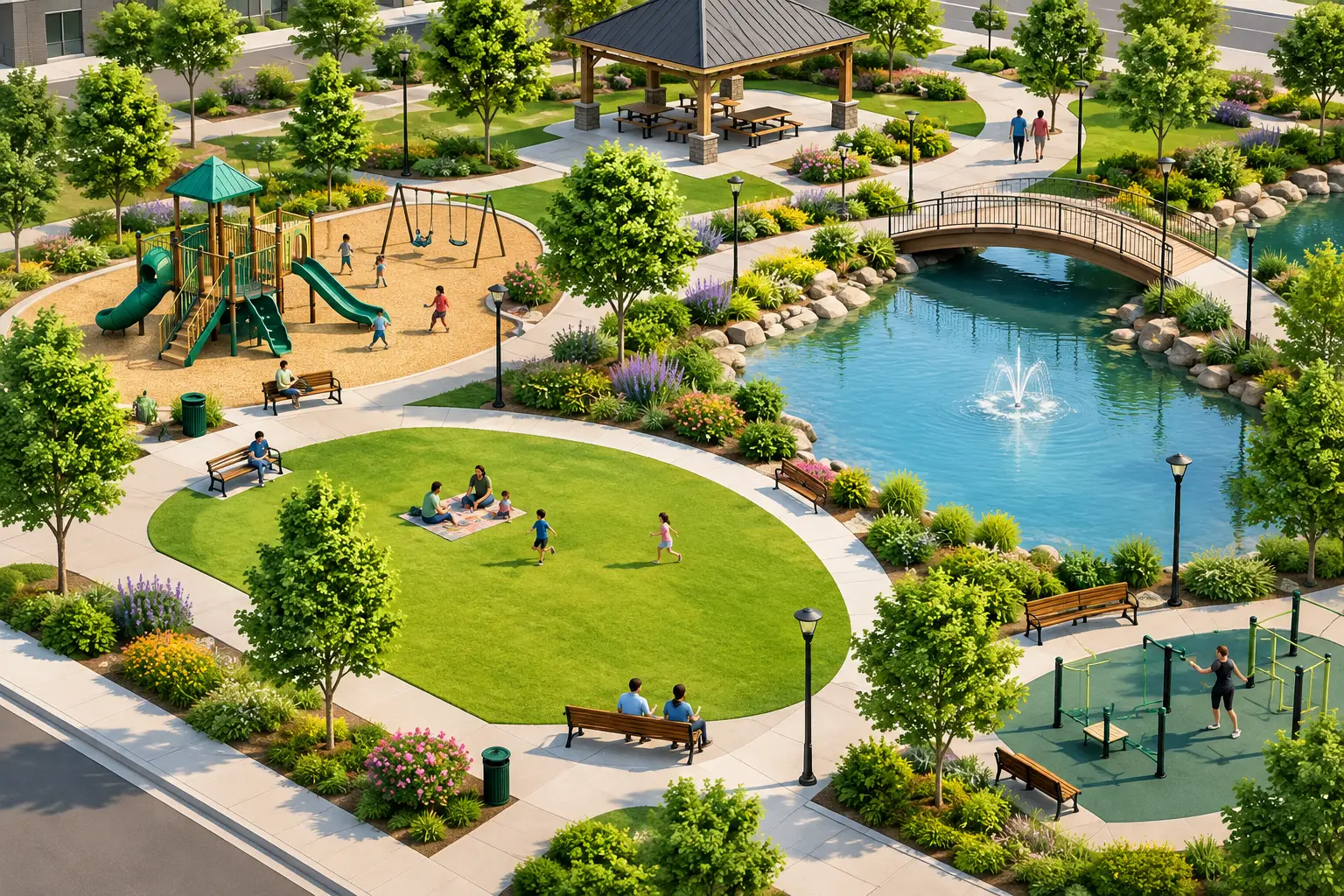
A park can look newly opened and still fail its community within one summer. Faded court coatings, overheated play areas, uneven walking paths, poor drainage, and equipment selected without a maintenance plan quickly turn a public asset into an underused expense. Effective municipal park revitalization addresses these operational realities from the first site assessment, creating recreation environments that remain safe, attractive, and active under Saudi Arabia’s demanding conditions.
For municipalities, developers, and public-space operators, the objective is not simply to replace old equipment. It is to improve how a site performs: how people enter it, move through it, exercise in it, gather in it, and return to it. That requires full-scope planning across civil works, drainage, surfacing, shade, sports systems, accessibility, and long-term maintenance.
Municipal Park Revitalization Starts With How the Park Is Used
The strongest revitalization programs begin with evidence, not a product list. A neighborhood park used by families in the evening has different requirements from a destination park serving cyclists, runners, school groups, and organized sports. A compact urban parcel may need multi-use activity zones. A larger community park may need clear circulation between sports courts, children’s play, fitness areas, walking loops, seating, and landscaped spaces.
Site observations should identify where residents already gather, where circulation breaks down, and which assets have become barriers. Empty courts may indicate poor surface condition, insufficient lighting, or the wrong sport mix. Worn grass may reveal informal desire paths. An unused play area may be exposed to excessive heat or lack seating for parents. These findings shape a revitalization brief grounded in real use rather than assumptions.
Municipal teams should also consider operating patterns. Evening demand is often stronger than daytime demand in hot climates. Facilities must therefore support safe nighttime access, practical lighting strategies, heat-conscious layouts, and durable surfaces that recover from repeated use. The design standard should be consistent performance throughout the year, not a strong opening-day impression.
Build a Complete Activity Mix, Not Isolated Amenities
A revitalized park works best when it supports different ages and activity levels without creating conflict between users. The goal is an organized recreation environment where active zones have clear purpose and quieter areas retain comfort and visibility.
A flexible sports court can provide basketball, futsal, or general community play, depending on its dimensions, markings, fencing, and equipment. Outdoor fitness stations create an accessible option for adults who may not use formal sports facilities. Rubberized walking and running routes support casual movement, while a dedicated running track can serve schools, clubs, and more structured training. Pump tracks and skate parks can give young users a defined, durable place to ride rather than pushing wheeled activity onto pedestrian paths.
The right mix depends on the catchment area and available footprint. In a dense neighborhood, one high-quality multi-sport court and a shaded fitness zone may deliver more value than several small, disconnected installations. In a destination development, a broader offer may be justified, including padel courts, running loops, cycling features, outdoor fitness, and social seating areas.
The key is adjacency. Active spaces should be close enough to create energy but separated enough to protect users. Ball courts need controlled boundaries. Skate elements require predictable rider flow. Fitness equipment benefits from visual openness and nearby shade. Walking routes should avoid forcing pedestrians through high-speed activity zones. These details determine whether a park feels intuitive or poorly coordinated.
Design for Heat, UV Exposure, and Heavy Foot Traffic
Saudi conditions place high demands on every exposed material. Surface selection cannot be based on color samples or initial price alone. Asphalt preparation, concrete quality, expansion considerations, drainage falls, coatings, adhesives, and edge details all affect service life.
Acrylic court systems should be specified for UV stability, slip resistance, consistent ball response, and resistance to repeated thermal movement. Artificial turf requires an appropriate yarn system, infill approach, drainage layer, and base construction for its intended use. EPDM rubber flooring can provide valuable impact attenuation around fitness and play spaces, but thickness, sub-base preparation, drainage, and installation control determine whether it performs as intended.
Shade is equally functional. It improves comfort, extends usable hours, and protects surfaces from concentrated solar exposure. However, shade structures must be coordinated with wind loading, foundations, drainage, lighting, and maintenance access. A shaded zone that blocks sightlines or creates pooling water is not a successful improvement.
Material choices should also account for cleaning and repair. Municipal assets experience continuous use by diverse users. Systems that require specialist intervention for minor repairs, or that cannot tolerate routine cleaning methods, may create avoidable operational pressure over time.
Safety and Accessibility Are Performance Requirements
Public parks are judged by how confidently people can use them. That means safe entries, even transitions, visible routes, controlled edges, and surfaces appropriate to each activity. Compliance should not be treated as a final inspection item. It needs to influence the layout and construction methodology from the outset.
Accessibility is not limited to ramp placement. It includes practical route widths, stable surfaces, resting points, clear wayfinding, and the ability for users with different mobility needs to participate in the park experience. A parent with a stroller, an older walker, and a wheelchair user should not need to take different improvised routes to reach key amenities.
Sports and fitness areas require their own safety discipline. Court fencing must be correctly positioned and securely installed. Goalposts, basketball systems, and fitness equipment need reliable anchoring and inspection procedures. Impact surfaces should match the risk profile of the equipment above them. Drainage channels, level changes, and hardscape edges must be designed to prevent trips while allowing water to leave the site efficiently.
This is where specialist contractor accountability matters. A high-performance surface can still underperform when the base is poorly compacted, the slope is inaccurate, or the transitions are not detailed correctly. Quality is built into the entire system, not added at the finish line.
Plan Delivery Around Existing Park Operations
Revitalization projects often take place in parks that remain partially open. Phased delivery can protect public access while controlling construction risk. It may be practical to complete civil works and drainage first, then install courts, fitness areas, and landscape interfaces in defined zones. The right sequence depends on site access, utilities, procurement requirements, weather, and the need to preserve mature planting.
Before construction begins, the project team should confirm underground services, existing levels, drainage routes, access for equipment, and material storage areas. These issues are less visible than a new court or track, but they directly affect schedule certainty and final quality. Early coordination also prevents newly installed surfaces from being damaged by later civil works.
A turnkey partner brings value by maintaining control from concept design through installation, inspections, handover, and future upgrades. StepX Sports applies this approach through material selection, precision installation standards, and maintenance-aware delivery for recreational assets built for Saudi conditions.
Measure Value Beyond the Opening Ceremony
A revitalized municipal park should be evaluated after use begins. Operators can track which zones attract repeat users, when peak demand occurs, where maintenance issues appear, and whether the activity mix matches the community. This feedback supports better programming, targeted improvements, and more informed planning for future sites.
Long-term value comes from durable construction, but also from an environment people choose to use. A well-lit court that hosts informal games, a walking loop that welcomes daily routines, and a shaded fitness area that remains comfortable in the evening all contribute to public health and community identity. When municipal park revitalization is engineered as a complete, maintainable system, it becomes more than a capital project. It becomes a civic asset that keeps earning its place in the neighborhood.