
Acrylic Sports Courts Built for Saudi Conditions
Recent Posts
Adventure Parks Built for Saudi Conditions
November 1, 2026
Artificial Turf Dust: Causes, Risks, and Control
October 31, 2026
Acrylic Court System Review for Saudi Projects
October 30, 2026
What Drives Strong Padel Court Profitability?
October 29, 2026
Share Post
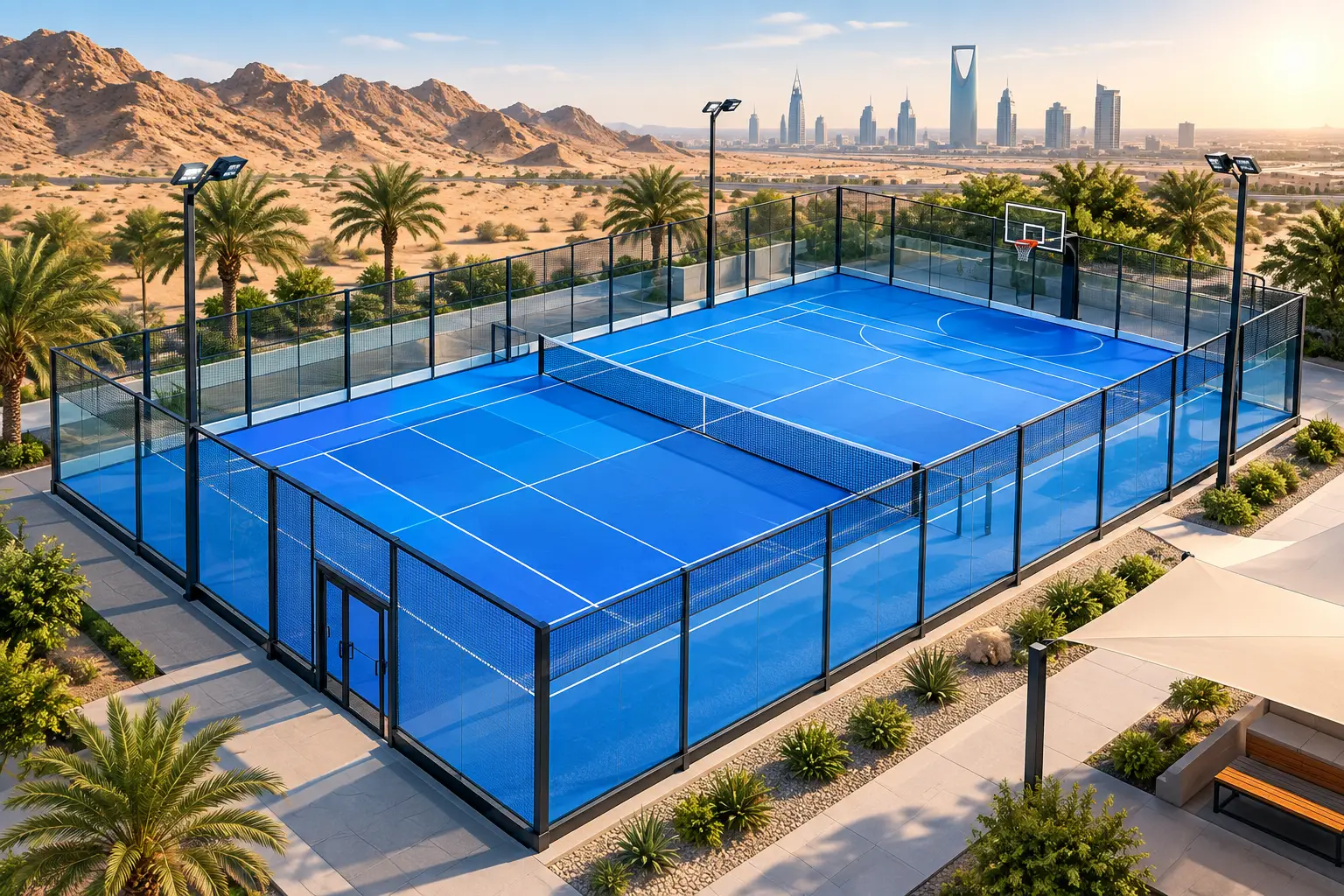
Acrylic is not simply the color layer players see when they step onto a tennis, basketball, or multipurpose court. It is a performance system that must work with the concrete or asphalt base below it, manage intense solar exposure, retain traction, and deliver a consistent playing response over years of public or institutional use. In Saudi Arabia, where surface temperatures, dust, UV exposure, and heavy foot traffic place unusual demands on outdoor facilities, selecting the correct acrylic system is a construction decision with long-term operational consequences.
For developers, schools, municipalities, compounds, and hospitality destinations, the goal is not merely a court that looks complete at handover. The goal is a durable recreation asset that continues to perform safely, presents well, and can be maintained without repeated disruption.
What an Acrylic Sports Court System Does
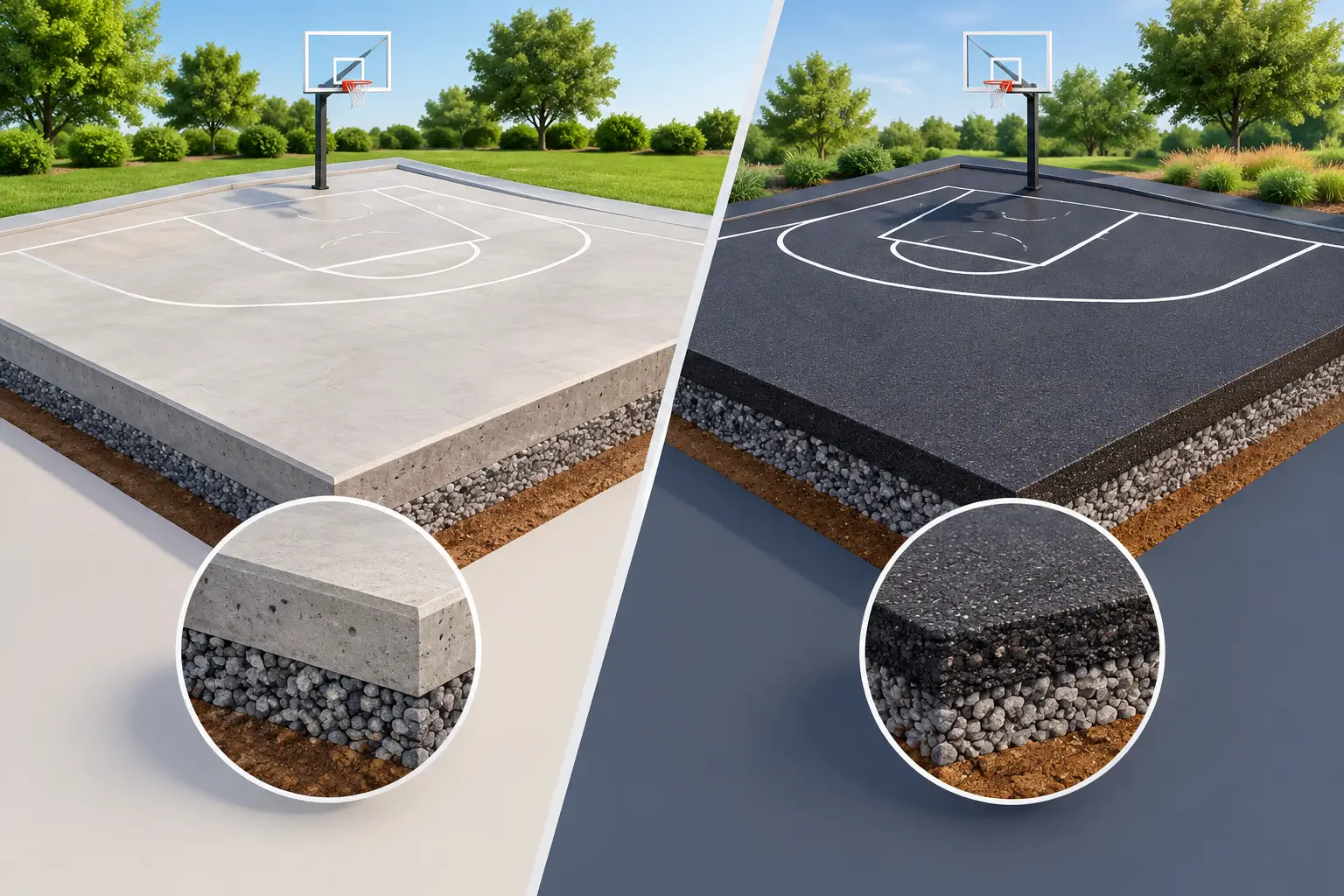
An acrylic sports court is a multi-layer coating system installed over a properly prepared asphalt or concrete substrate. The system commonly includes a primer or base treatment, leveling materials, resilient or texture layers where required, color coats, and line markings. Each layer has a specific job: bond to the substrate, correct minor surface variation, provide controlled texture, resist weathering, and create a clear, professional playing surface.
Acrylic systems are widely used for tennis courts, basketball courts, pickleball courts, netball areas, school play zones, and multipurpose games areas. Their value comes from a balance of visual quality, predictable traction, low routine maintenance, and flexibility in court layout and color design.
That balance depends on the application. A high-traffic public basketball court has different demands from a private tennis court. A school facility may prioritize slip resistance, clear game markings, and easy cleaning. A premium residential development may place greater emphasis on appearance, player comfort, and coordinated landscaping. The coating specification should follow the operating brief, not a generic material schedule.
Why Saudi Conditions Change the Acrylic Specification
Heat is one of the defining design inputs for outdoor court construction in the Kingdom. Extended UV exposure can accelerate color fade and place stress on coating layers, while high surface temperatures can amplify movement in the substrate beneath. Dust and sand accumulation can also affect traction and appearance if cleaning access is not planned from the start.
An acrylic surface built for Saudi conditions therefore requires more than a standard product selection. It requires compatible materials, correct layer thickness, disciplined substrate preparation, and installation timing that accounts for temperature and curing requirements. Applying a coating system to a base that is too hot, damp, weak, or contaminated can compromise adhesion before the court enters service.
Drainage also matters. Acrylic coatings are water-resistant, but no coating system can compensate for standing water caused by poor falls, blocked drainage, or an incorrectly designed base. Water that remains on the surface can contribute to staining, localized wear, and premature failure around cracks or joints. A court should shed water efficiently while remaining level enough for the intended sport.
The most reliable projects treat civil works and surface finishing as one connected scope. Base construction, edge restraint, drainage, slope control, crack treatment, coating installation, and line marking must be coordinated under a single performance standard.
The Base Determines the Court’s Future
Many apparent acrylic problems begin below the acrylic. A high-quality coating cannot hide a base with structural cracking, settlement, weak concrete, poor compaction, or incorrect gradients. It may temporarily improve the appearance, but the underlying movement will eventually reappear through the finished surface.
Concrete and asphalt can both support acrylic court systems, provided they are designed and prepared correctly. Concrete offers strength and dimensional stability but requires sufficient curing and proper joint treatment. Asphalt can provide a suitable playing base when it is properly compacted, smooth, and supported by a stable sub-base. The best choice depends on site conditions, budget, structural design, the sport being played, and the wider construction program.
Before installation, the base should be inspected for flatness, moisture, cracks, laitance, contamination, and drainage performance. Localized repairs must be completed with compatible materials. Surface grinding, cleaning, patching, and crack treatment are not minor preliminaries. They are the work that allows the acrylic system to bond and perform as designed.
For facilities expecting high use, it is also wise to assess the routes around the court. Service access, perimeter drainage, fencing, lighting foundations, spectator circulation, and landscape irrigation should not create water, debris, or impact risks at the playing edge.
Selecting the Right Acrylic Court System
Acrylic court systems are not all the same. The key choice is typically between a standard hard-court system and a cushioned acrylic system. Both can deliver excellent results when properly specified, but they serve different priorities.
A standard acrylic hard court provides a firm, responsive surface with controlled texture. It is a practical choice for many tennis, basketball, and multipurpose facilities because it offers long service life, clean aesthetics, and relatively straightforward maintenance. The surface feel is direct, which can suit competitive play and high-turnover public facilities.
A cushioned acrylic system incorporates resilient layers beneath the color coats. This can improve underfoot comfort and reduce impact loading for players, particularly on tennis courts and facilities with extended use periods. However, cushioning adds cost and requires careful installation control. It should be selected because the user profile and facility brief justify it, not because it is assumed to be better in every project.
Texture is equally important. Too little texture may reduce grip, especially when dust or moisture is present. Too much texture can increase abrasion on footwear, affect ball response, and make cleaning more difficult. The correct texture depends on the sport, expected user age, cleaning regime, and exposure conditions.
Color selection should consider more than branding. Lighter shades can reduce heat absorption compared with darker surfaces, while contrasting court and out-of-bounds colors improve visual definition. A well-designed color plan also supports wayfinding and gives a development a more deliberate, premium finish.
Game Lines and Multi-Sport Layouts
Line markings should be planned early, especially where one court supports several activities. Basketball, tennis, pickleball, and school recreation markings can coexist, but excessive lines create visual confusion and can reduce the quality of the player experience.
A disciplined layout uses hierarchy. Primary sport markings should be clear and prominent, while secondary markings should use carefully chosen colors that remain visible without competing with the main court. Dimensions, run-off areas, net post locations, and fencing clearances must be confirmed before coating work begins. Correcting a layout after final coats have been applied is avoidable cost.
Installation Quality Is a Performance Requirement
Acrylic application is precision work. Surface preparation, material mixing, spread rates, layer sequencing, curing periods, and weather monitoring all affect the final result. A court can look acceptable on completion yet develop adhesion issues, uneven texture, or visible patching if these controls are not managed consistently.
Professional installation begins with a verified substrate and an approved method statement. The installation team should monitor ambient and surface conditions, apply materials at specified coverage rates, maintain uniform texture, and allow each layer to cure before the next is installed. Final line marking should be crisp, accurately set out, and compatible with the completed coating system.
This is where full-scope delivery provides practical value. When one specialist contractor manages design coordination, civil interfaces, surface specification, installation, inspection, and maintenance guidance, accountability is clearer. There is less opportunity for a base contractor, coating applicator, and operator to transfer responsibility when a defect appears.
Maintenance That Protects Appearance and Safety
Acrylic courts are low maintenance, not no maintenance. Routine care protects traction, color consistency, drainage performance, and the impression the facility makes on users.
Regular sweeping or blowing removes dust, sand, leaves, and loose debris. Periodic washing removes embedded dirt and helps prevent surface buildup. Drainage channels and surrounding areas should be kept clear so water does not carry debris back onto the court. Operators should also inspect for cracks, coating wear, standing water, fading, and damage caused by movable equipment or unauthorized vehicle access.
Small issues should be addressed early. Crack treatment, localized repairs, and recoating at the right point in the asset cycle are significantly more efficient than waiting until the surface condition affects safety or requires a full rehabilitation. A planned maintenance program also allows operators to schedule work around school terms, community programs, or peak hospitality periods.
Building a Court That Earns Long-Term Use
An acrylic court succeeds when it invites use from the first day and retains that quality through years of sun, traffic, and changing community needs. Its performance is shaped by the complete system: site drainage, stable base construction, heat-appropriate materials, accurate installation, and a realistic maintenance plan.
For major developments and public facilities, this is an opportunity to create more than a marked play area. It is a durable setting for movement, competition, and community connection. StepX Sports approaches acrylic court delivery as a full-scope asset, engineered to meet Saudi conditions and built to remain part of a development’s active legacy.