
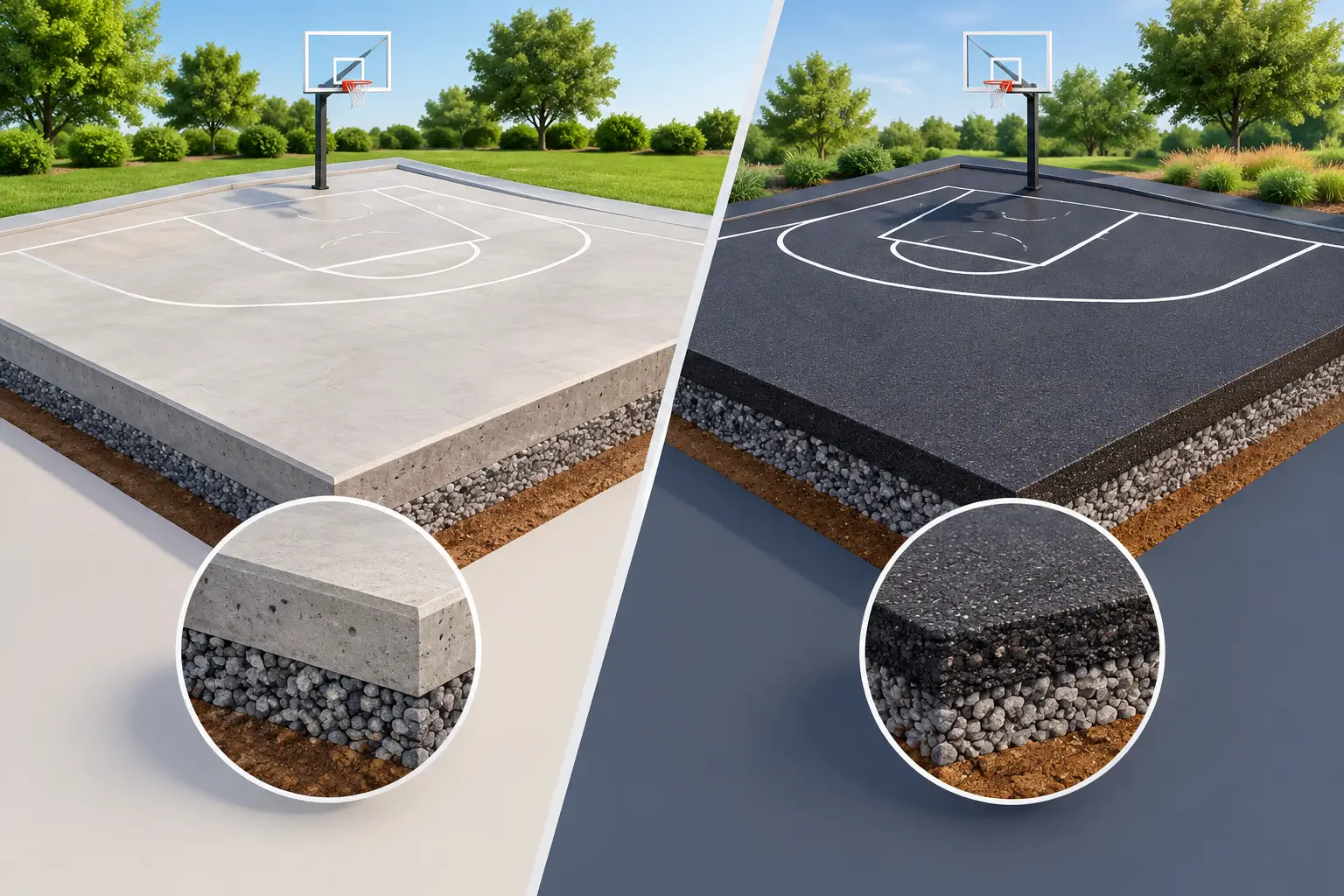
How to Specify Saudi Turf for Lasting Performance
Recent Posts
Adventure Parks Built for Saudi Conditions
November 1, 2026
Artificial Turf Dust: Causes, Risks, and Control
October 31, 2026
Acrylic Court System Review for Saudi Projects
October 30, 2026
What Drives Strong Padel Court Profitability?
October 29, 2026
Share Post
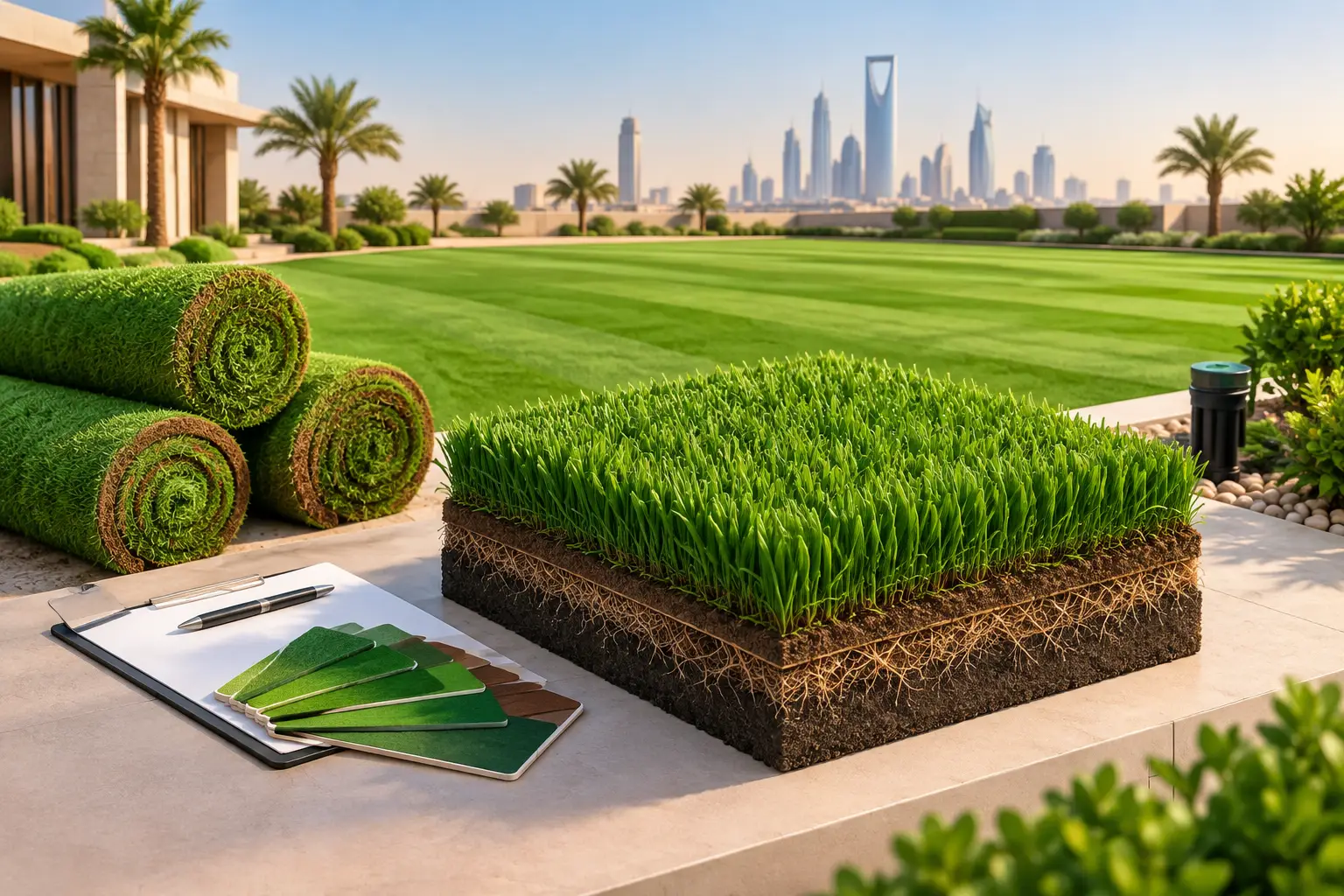
A turf field can look complete on handover day and still underperform within a few Saudi summers. The usual cause is not one failed component. It is a specification that treated artificial turf as a finish rather than a complete surface system. Knowing how to specify Saudi turf means defining how the facility must perform under heat, UV exposure, abrasive dust, heavy use, irrigation requirements, and the expectations of its operators.
For a school, municipality, developer, or compound operator, the right decision is not simply selecting a pile height and color. It is coordinating the playing surface, shock pad where required, infill, drainage, base construction, perimeter details, and installation controls. Each layer affects safety, appearance, maintenance, and asset life.
How to Specify Saudi Turf: Begin With the Operating Brief
Start with the facility’s actual use, not the product brochure. A five-a-side football pitch used every evening has different requirements from a landscape recreation area, a school multi-use zone, or a premium residential garden. The surface must be engineered around the intensity and type of traffic it will receive.
Define the primary activity, anticipated users, operating hours, peak load, and any secondary uses. Football requires predictable ball roll, traction, and player comfort. A multi-use field may prioritize resilience and simpler maintenance over competition-level play characteristics. For playground or family recreation areas, impact attenuation and accessibility can be more important than ball behavior.
The brief should also establish whether the facility will host organized play, informal community use, coaching, events, or seasonal programming. This informs line marking, layout, fencing interfaces, lighting access, maintenance routes, and the expected rate of wear in goalmouths, entry points, and high-turn areas.
A specification should state measurable outcomes wherever possible. Terms such as “high quality” and “premium turf” are not performance criteria. Specify the intended use, design life, safety expectations, drainage response, and acceptance tests. This gives the project team a common standard from design through handover.
Treat Heat and UV Exposure as Core Design Inputs
Saudi conditions place exceptional demands on polymer fibers, backing coatings, adhesives, infill, and jointing methods. Direct sun, high surface temperatures, thermal movement, and dust exposure can accelerate wear when materials are selected only for mild-climate applications.
Specify UV-stabilized turf fibers and backing systems from established, traceable suppliers. The submission should identify the yarn composition, fiber profile, pile weight, pile height, stitch rate, backing construction, and coating type. These details should be assessed together. A tall pile alone does not prove durability, just as a dense-looking sample does not confirm that the backing and tuft bind will withstand sustained outdoor use.
Color selection also deserves practical consideration. Lighter green tones can reduce the visual impression of heat fading and dust accumulation, while darker tones may create a richer initial appearance but show contamination more readily. The best choice depends on the project identity, cleaning regime, and surrounding hardscape.
Surface temperature cannot be eliminated by specification alone. It can, however, be managed through an appropriate turf system, suitable infill selection, planned irrigation where operationally viable, shaded spectator areas, and realistic expectations for midday use. A responsible specification recognizes this operational reality instead of promising an artificially cool surface in peak summer conditions.
Specify the Complete Turf System, Not a Sample Roll
A turf sample is useful for reviewing color, fiber feel, and visual density. It cannot demonstrate drainage performance, shock absorption, seam strength, base stability, or long-term play quality. Procurement should therefore assess a complete proposed system rather than comparing rolls of carpet in isolation.
The system begins below the turf. The formation must be surveyed and prepared to control settlement. The engineered aggregate base must be compacted to the required levels and gradients, with drainage designed around the local site conditions. Inadequate base preparation is one of the most expensive mistakes in artificial turf projects because ripples, ponding, seam stress, and uneven play frequently originate below the surface.
Drainage needs a site-specific answer. A compact urban site with limited outfalls may require a different strategy from a large open field in Riyadh, Jeddah, Dammam, or a destination development with integrated stormwater infrastructure. Confirm where water will go, how it will leave the system, and whether surrounding grades could direct runoff onto the turf. The field should not become the lowest point in the landscape.
Then consider whether a shock pad is needed. For football, recreational play, schools, and high-use facilities, a properly designed shock pad can improve impact performance, consistency, and long-term player comfort. It also provides a more stable performance layer than relying entirely on loose infill. However, it adds cost and requires precise base tolerances. On lower-intensity landscape applications, it may not be necessary. The decision should follow the risk profile and intended use.
Infill selection is similarly dependent on the project. Sand-only systems, sand-rubber blends, coated granules, and alternative organic infills all involve trade-offs in heat response, ball behavior, compaction, maintenance demand, odor, migration, and cost. The right choice is the one that supports the intended sport and operating plan, not the one that offers the lowest initial price.
Set Clear Material and Performance Requirements
A tender specification should require enough technical information to prevent substitutions that reduce asset life. It should also leave room for qualified system providers to propose proven alternatives that meet the stated outcomes.
At a minimum, request documented details for the following:
- Turf yarn type, polymer composition, fiber shape, pile height, pile weight, stitch rate, and primary and secondary backing.
- UV stabilization, color-fastness approach, tuft bind, seam method, adhesive system, and relevant product warranties.
- Infill material, particle size, installation depth, final pile exposure, and maintenance requirements.
- Shock pad composition, thickness, drainage characteristics, and impact-performance data where a pad is included.
- Base-course build-up, compaction requirements, drainage layout, finished levels, and edge restraint details.
Avoid copying a generic specification from a different climate or sports category. For example, a product intended for low-traffic landscaping may not retain fiber recovery in a heavily used school field. Conversely, an elite sports system may be unnecessary for a small private recreation area with limited use. Good specification is disciplined matching, not overbuilding every project.
Build Installation Quality Into the Contract
Even an approved turf system can fail if installation is poorly controlled. Require the contractor to provide method statements, setting-out procedures, base inspection records, material batch traceability, and a clear quality-control process before work begins.
The base should be accepted for level, gradient, compaction, and drainage before turf is unrolled. Turf rolls must be laid with consistent pile direction and allowed to acclimatize as needed before cutting and seaming. Joints require particular care. Misaligned seams, insufficient adhesive coverage, contamination, or rushed curing can create visible lines and early separation.
Infill should be installed in controlled passes and brushed into the pile evenly. Uneven distribution affects ball response, player traction, and fiber support. The contractor should also protect completed zones from construction traffic, equipment damage, and contamination from adjacent civil works.
For turnkey facilities, coordinate turf installation with fencing, gates, sports equipment, lighting columns, drainage chambers, and surrounding paving. Interfaces are where many defects begin. A gate threshold that traps loose infill, a poorly detailed curb that prevents drainage, or a fence footing that interrupts the edge system can create recurring maintenance issues long after opening.
Plan for Inspection, Maintenance, and Renewal
Artificial turf is low maintenance, not no maintenance. A specification should identify who will brush the surface, redistribute infill, remove debris, inspect seams, manage weeds at perimeters, and monitor wear zones. Without these routines, the surface can compact, lose drainage efficiency, and develop uneven play characteristics.
Require practical handover documentation: as-built drawings, material records, warranty terms, maintenance schedules, cleaning guidance, and an inspection checklist. Facility operators should understand which cleaning chemicals, vehicles, footwear, and equipment are permitted. They should also know when a localized repair is sufficient and when the field needs professional intervention.
Acceptance should be based on more than appearance. Inspect drainage function, surface evenness, joint quality, line marking, infill distribution, edge restraint, and the condition of adjacent works. For performance-focused sports installations, verify applicable safety and play criteria through the appropriate testing process. This establishes a defensible baseline for future maintenance and warranty discussions.
The strongest turf projects are specified as long-term community infrastructure, not as a short-term visual upgrade. When the brief, civil works, materials, installation, and maintenance plan operate as one system, the field is better positioned to deliver safe, consistent play through demanding Saudi conditions. That is the standard StepX Sports applies when turning an outdoor recreation brief into an asset built to keep people moving.