
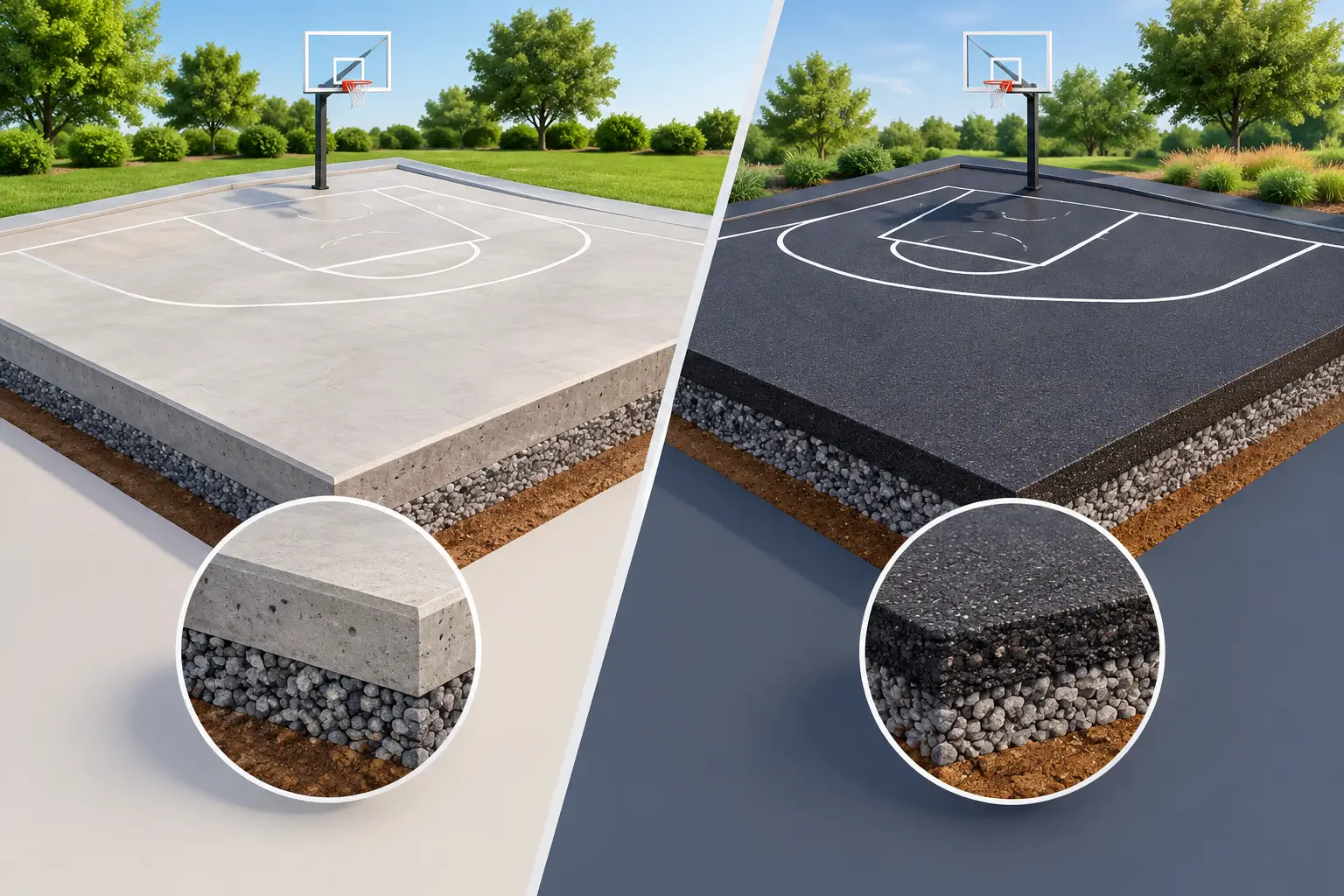
Heat Resilience for Saudi Sports Facilities
Recent Posts
Adventure Parks Built for Saudi Conditions
November 1, 2026
Artificial Turf Dust: Causes, Risks, and Control
October 31, 2026
Acrylic Court System Review for Saudi Projects
October 30, 2026
What Drives Strong Padel Court Profitability?
October 29, 2026
Share Post
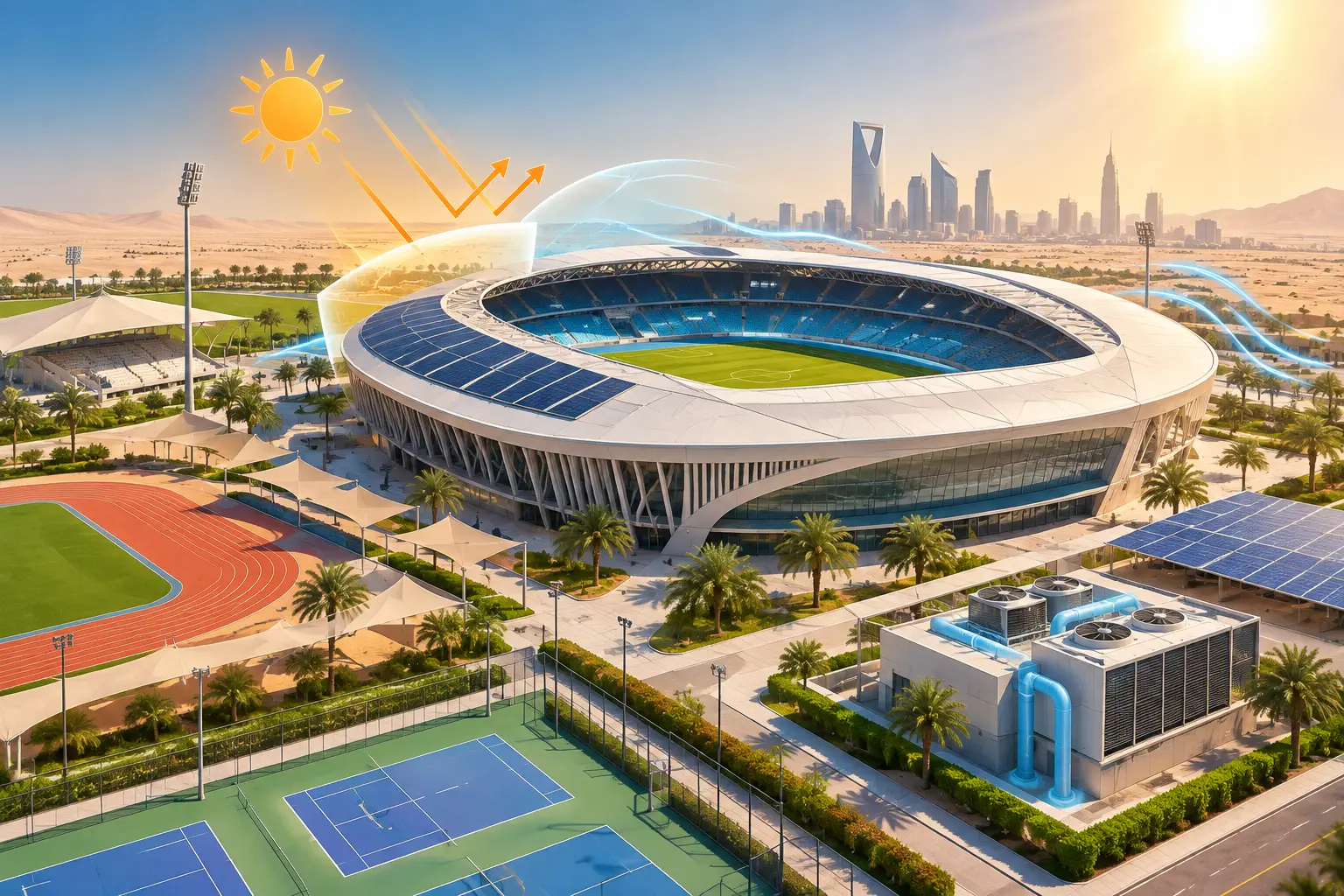
A court can look complete on handover day and still be vulnerable to its first Saudi summer. Heat resilience is the difference between an outdoor facility that continues to deliver safe, consistent play and one that begins to fade, crack, deform, or lose user confidence under daily sun exposure.
For developers, municipalities, schools, and destination operators, this is not a material preference. It is an asset-performance decision. Courts, tracks, playgrounds, fitness areas, and recreational landscapes are expected to support active communities for years. Their surfaces must be specified and installed for the climate they will actually face, not for a generic catalog condition.
What Heat Resilience Means in Sports Infrastructure
In recreational construction, heat resilience describes a facility’s ability to retain its functional, visual, and safety performance through repeated high-temperature exposure. It is not limited to whether a surface survives the heat. A surface may remain physically intact while becoming too hot to use, losing traction, showing accelerated color change, or developing joints and cracks that affect play and maintenance requirements.
High-performing heat-resilient design considers the entire system. That includes the sub-base, drainage, moisture management, primers, adhesives, surfacing layers, line markings, edge details, and construction tolerances. Each component has a role in controlling movement, water, surface temperature, and long-term wear.
This matters across Saudi Arabia, where intense solar radiation, high ambient temperatures, dust, occasional heavy rain, and frequent daily use can work together to shorten the life of poorly specified facilities. A basketball court in Riyadh, a resort fitness zone in Jeddah, and a destination sports area in NEOM may have different operating conditions, but all need a clear response to heat and exposure.
Why Heat Damages Outdoor Courts and Recreation Areas
Heat acts on materials in several ways at once. Most visibly, it raises surface temperatures well above the ambient air temperature. Dark surfaces, dense urban surroundings, and limited shade can intensify that effect, influencing user comfort and limiting the hours when a space can be safely occupied.
Less visibly, repeated heating and cooling causes materials to expand and contract. When the surface system, joints, base construction, or edge restraints do not accommodate that movement, stresses accumulate. The result can be cracking in acrylic systems, debonding in layered finishes, seam issues in artificial turf, or distortion in certain rubber and polymer-based installations.
Ultraviolet exposure creates another long-term pressure. UV radiation can alter binders, coatings, fibers, and pigments. Fading is often the first concern clients notice, yet the more consequential issue is material aging. As a system loses flexibility or surface integrity, cleaning becomes harder, repairs become more frequent, and play quality can decline.
Water management cannot be separated from heat performance. A base that holds moisture or drains inconsistently can create localized failures after rainfall or washdown. When trapped moisture and high temperature cycles meet, bond strength and dimensional stability may be affected. Good drainage protects more than the facility’s appearance. It protects the full surface assembly.
Design Decisions That Build Heat Resilience
The correct specification starts with site assessment, not the finish color. Decision-makers should establish how the facility will be used, when it will be used, what loads it will carry, and how the surrounding development affects sun, wind, access, and drainage.
Start Below the Playing Surface
A premium surface cannot compensate for an unstable or poorly prepared base. Sub-base design must account for local ground conditions, anticipated loading, drainage falls, and the selected surfacing system. Inconsistent levels or inadequate compaction may not be obvious at practical completion, but they can become visible when thermal movement and traffic begin to test the installation.
For acrylic sports courts, a correctly constructed asphalt or concrete base provides the foundation for consistent ball response, coating adhesion, and crack-management strategy. For artificial turf, base preparation influences drainage, planarity, and the behavior of seams and infill. For EPDM flooring and polyurethane systems, the substrate condition directly affects bond performance and finish quality.
Precision installation standards are therefore not a secondary construction detail. They are central to lifecycle performance.
Specify Systems, Not Isolated Materials
A sports surface should be procured as a tested system with compatible layers and clear installation requirements. Selecting a top layer without confirming the primer, adhesive, cushioning layer, joint treatment, and substrate preparation can introduce avoidable risk.
The right system depends on the application. An outdoor multi-sport court requires abrasion resistance, UV stability, traction, and predictable play. A running track needs force reduction, spike resistance where applicable, and dependable drainage. A playground or outdoor fitness area requires shock absorption, slip resistance, and cleanable finishes that can withstand heavy use.
There are trade-offs. Lighter colors can help manage heat absorption but may show dust and marks more readily. Highly textured finishes can improve wet traction but may change cleaning needs and ball behavior. Artificial turf may provide a familiar green appearance and versatile use, while its fiber, infill, backing, and drainage design must be chosen carefully to control heat, compaction, and maintenance demands.
A capable contractor makes those trade-offs visible before construction, then recommends the system that fits the operating brief rather than the lowest initial purchase price.
Plan for Water, Shade, and User Comfort
Heat resilience should improve the experience of using the facility, not simply protect its materials. Orientation, shade structures, seating zones, drinking-water access, planting, and circulation routes can make an outdoor recreation area more usable during long hot seasons.
Shade does not replace a correctly specified surface, and it is not suitable for every court layout or sporting requirement. However, it can reduce exposure in spectator areas, waiting zones, playground edges, and outdoor fitness spaces. In schools, compounds, and public parks, these measures can extend daily use while supporting safer supervision and more comfortable community engagement.
Drainage details deserve equal attention. Falls must direct water away from active surfaces without creating disruptive slopes for sport. Channels, edge restraints, inspection points, and surrounding hardscape levels should be coordinated as one civil package. This is where full-scope design-and-build control reduces handoff gaps between trades.
Installation Quality Determines Long-Term Performance
Even a well-chosen system can underperform if site execution is inconsistent. Temperature and moisture conditions during application matter. Surface preparation, primer coverage, curing times, seam alignment, layer thickness, and line-marking accuracy must be controlled and documented.
For outdoor facilities, the work sequence should also protect completed areas from construction traffic, contamination, and premature use. A rushed handover can turn a durable specification into an early maintenance issue.
StepX Sports approaches these facilities as engineered community assets, combining material selection with in-house construction oversight, installation control, inspections, and long-term support. This integrated responsibility is valuable for clients who need one accountable specialist from concept design through operational use.
Maintenance Is Part of Heat Resilience
Heat-resilient infrastructure still requires a planned maintenance regime. The goal is not constant intervention. It is early detection and disciplined care before minor defects affect safety or require extensive repair.
Routine inspections should look for coating wear, cracks, ponding, loose edges, seam movement, drainage blockage, surface contamination, and changes in traction. Artificial turf also needs periodic brushing, infill monitoring where used, and attention to seams and perimeter details. Rubber and polyurethane areas should be kept clean, inspected for damage, and repaired with compatible materials.
Maintenance frequency depends on footfall, sport intensity, surrounding dust, landscape debris, and the facility’s exposure profile. A heavily used school court and a lightly used private amenity space should not be managed by the same calendar alone. Condition-based inspections provide a better basis for maintenance planning.
Procurement Questions That Protect the Asset
Before appointing a contractor, project teams should ask how the proposed system performs under high UV and surface-temperature exposure, how its layers are compatible, and what substrate tolerances it requires. They should also request clarity on drainage design, quality-control checkpoints, manufacturer guidance, warranties, and the contractor’s responsibility after handover.
It is equally useful to ask who will manage interfaces between civil works, surfacing, fencing, lighting, equipment, and landscape elements. Many long-term defects emerge at those boundaries rather than in the center of a court.
The lowest bid can be appropriate only when scope, system quality, installation methodology, and accountability are truly equivalent. If one proposal excludes base corrections, drainage coordination, inspection procedures, or aftercare, its initial price does not represent its whole-life cost.
Saudi Arabia’s investment in active living, public realm development, education, and destination infrastructure creates an opportunity to build recreational assets with lasting value. Specify for the hottest operating day, install with precision, and manage the facility as the community asset it is meant to become.