
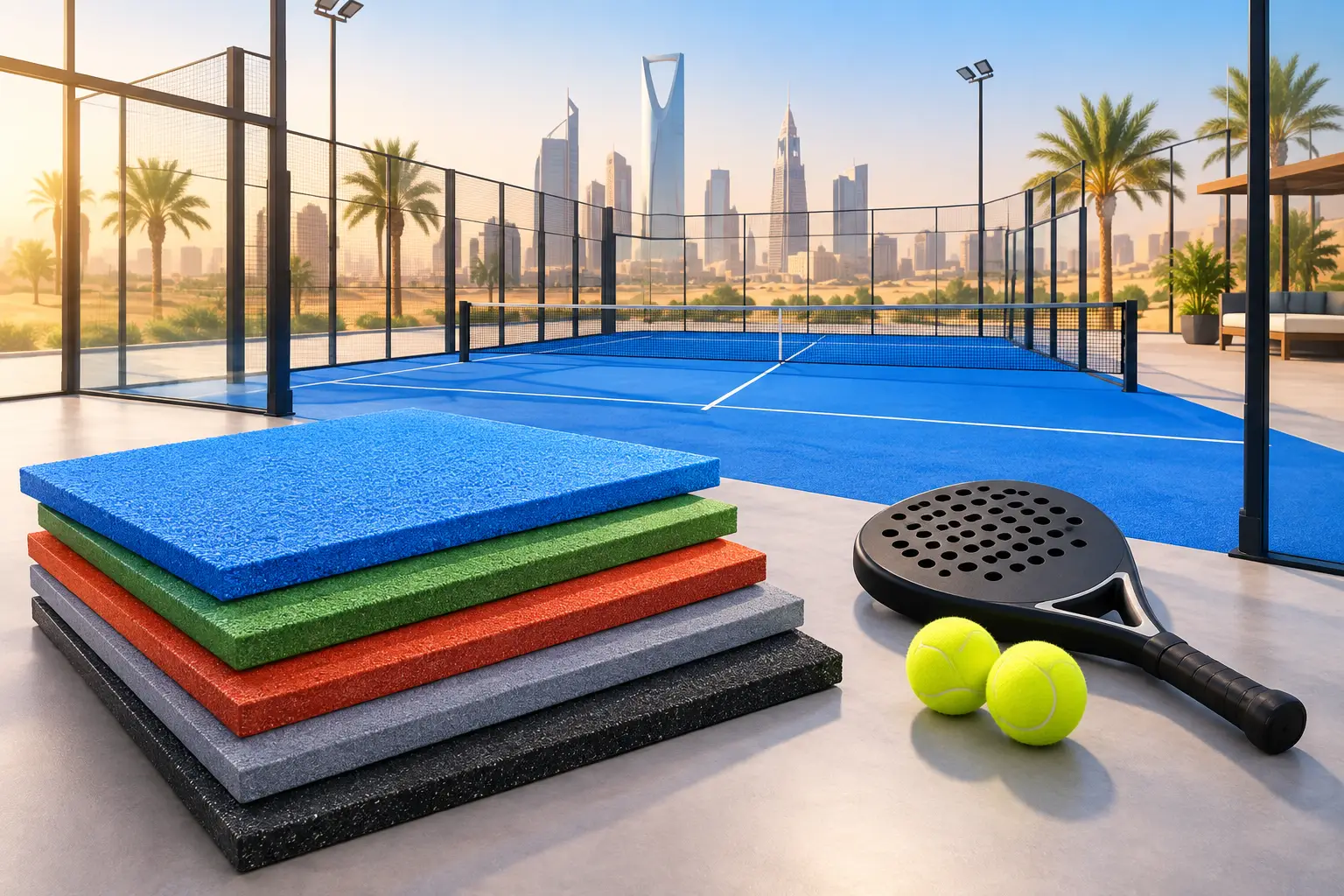
EPDM Rubber Flooring for Saudi Outdoor Spaces
Recent Posts
Selecting Turf Infill Materials for Saudi Sports
September 14, 2026
How to Upgrade Campus Recreation for Daily Use
September 13, 2026
Best Padel Court Materials for Saudi Conditions
September 12, 2026
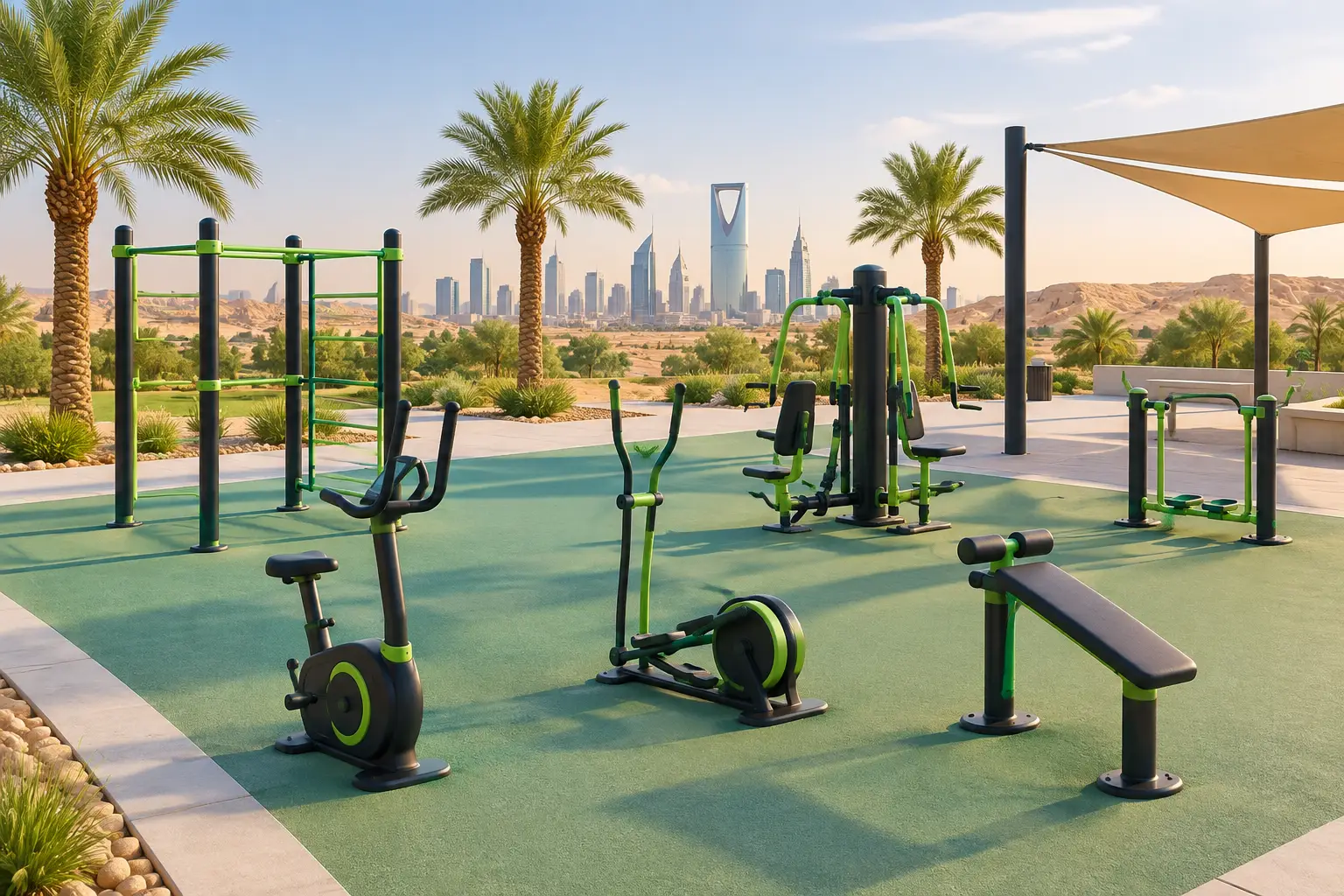
Best Outdoor Fitness Equipment for Saudi Sites
September 11, 2026
Share Post
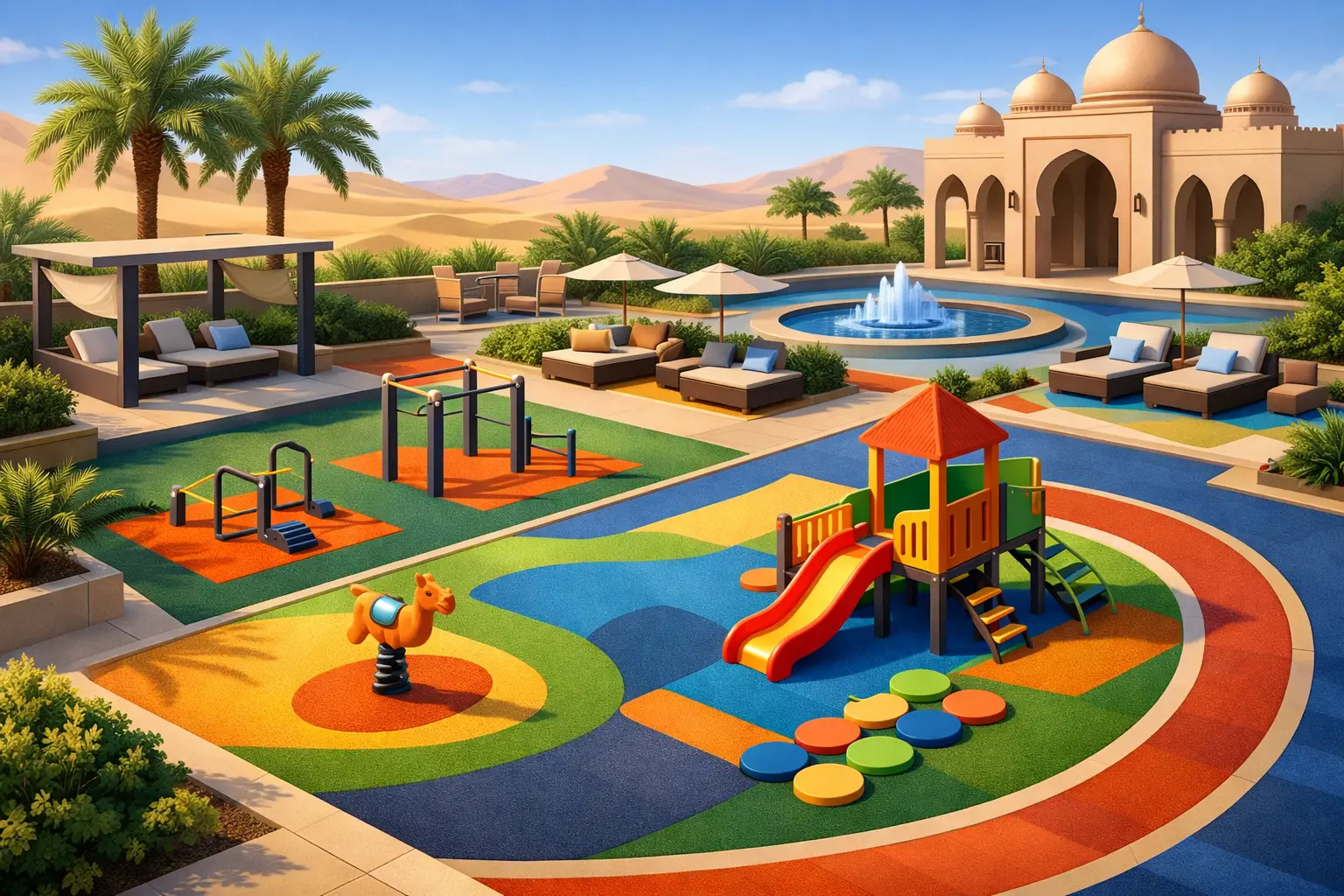
A playground, fitness zone, or leisure deck can look complete on opening day and still fail its users if the surface is not engineered for the site. In Saudi Arabia, EPDM rubber flooring is specified not simply for its appearance, but for its ability to provide impact protection, reliable grip, and lasting color under intense sun, heat, and daily use.
For developers, municipalities, schools, compounds, and hospitality destinations, the decision is larger than selecting a surface finish. It is about creating a safer, more inviting recreational asset that supports active lifestyles while controlling maintenance and replacement costs over its service life.
What EPDM Rubber Flooring Is Designed to Do
EPDM stands for ethylene propylene diene monomer, a synthetic rubber formulated for outdoor durability. In surfacing systems, colored EPDM granules are combined with a polyurethane binder and installed as a continuous, poured-in-place layer. The finished surface is resilient underfoot, slip-resistant, and available in a wide range of colors and design patterns.
The system is commonly installed over a prepared concrete or asphalt base. Where critical fall-height protection is required, such as beneath playground equipment, the EPDM wear layer is paired with a shock-absorbing base layer made from recycled rubber granules. The thickness of that base is engineered around the equipment height, intended use, and applicable safety requirements.
This distinction matters. A decorative rubber layer is not automatically a safety surface. The substrate, drainage, total thickness, material quality, and installation method all determine whether the finished area performs as intended.
Why EPDM Performs in Saudi Conditions
Outdoor recreation in Riyadh, Jeddah, Dammam, and major destination developments places exceptional demands on materials. High surface temperatures, ultraviolet exposure, sand, irrigation overspray, and concentrated foot traffic can quickly reveal weaknesses in poorly specified systems.
High-quality EPDM rubber flooring is valued because its granules are color-stable and weather-resistant. Unlike lower-grade alternatives that may fade, harden, or lose integrity under ultraviolet exposure, properly sourced EPDM is designed to retain flexibility and visual consistency over time. A suitable polyurethane binder is equally critical. It must be compatible with the climate, moisture conditions, and installation schedule to create a dependable bond between granules and base.
The surface also improves day-to-day usability. Its resilient texture offers more comfort than concrete or tile for walking, play, and bodyweight training. It can reduce the severity of impact from falls when designed as a tested safety system, while its textured finish helps maintain traction around active play areas and poolside-adjacent zones.
There are practical limits. No outdoor surface remains cool in direct Saudi summer sun, particularly in darker colors. Color selection, shade structures, planting, orientation, and operating schedules should work together to manage heat exposure. EPDM can improve comfort and safety, but it cannot replace sound site planning.
Where EPDM Rubber Flooring Adds Value
EPDM is a flexible solution because it can be formed around equipment, furniture, trees, ramps, and architectural features without relying on visible joints or standard tile dimensions. That design freedom is especially useful in premium developments where the recreational environment must feel integrated with the landscape and wider public realm.
Playgrounds and School Campuses
Play areas are the most established application for EPDM systems. The surface supports colorful layouts, pathways, learning graphics, and zones for different age groups. More importantly, it can be engineered around critical fall heights beneath climbing frames, swings, and other play equipment.
For schools and universities, a poured rubber surface also reduces loose material migration compared with sand or loose-fill systems. It creates a cleaner, more accessible environment for students, staff, and facility teams, provided the drainage and edge details are properly resolved.
Outdoor Fitness and Wellness Areas
Outdoor fitness has become a central feature of compounds, parks, hospitality projects, and corporate campuses. EPDM provides a stable and forgiving surface around calisthenics equipment, stretching zones, and low-impact training areas. It supports a more comfortable user experience than hard paving while delivering a finished appearance aligned with premium development standards.
Heavy free-weight zones may require a different specification, particularly where repeated dropped loads are expected. In those cases, thicker rubber systems, specialized gym flooring, or reinforced details may be more appropriate. The surface must match the activity, not just the visual brief.
Parks, Walkways, and Recreational Zones
EPDM can create colorful running loops for children, soft walking paths, sensory play areas, and transition zones around multi-use spaces. Its continuous finish is useful where accessibility, visual wayfinding, and low trip risk are priorities.
For high-speed running tracks or formal athletics facilities, a purpose-designed polyurethane track system is normally the better solution. EPDM flooring is versatile, but specialist sport surfaces should be selected for their specific performance demands.
System Design Starts Below the Surface
The visible EPDM layer is only one part of a successful installation. Long-term performance depends first on the civil works beneath it. The base must be stable, clean, dry, correctly sloped, and free from cracking or movement that could transfer through the finished surface.
Drainage requires particular attention. Standing water can compromise the surface, create hygiene issues, and accelerate deterioration at weak points. A specialist contractor reviews falls, drainage routes, surrounding irrigation, and edge restraints before material installation begins. This is especially relevant in landscape-led projects, where water from adjacent planters or hardscape can enter the recreational zone.
Expansion joints, transitions to paving, equipment footings, and perimeter edges also need coordinated detailing. These are not minor construction items. They are common locations for water ingress, edge lifting, and premature surface failure when responsibility is divided between multiple trades.
A full-scope delivery approach brings the base preparation, surface design, equipment coordination, and installation under one accountable process. That control reduces interface risk and helps ensure the completed area performs as a unified system.
Selecting the Right EPDM Specification
The correct specification should be based on use, not a generic thickness. A decorative path, a school play area, and an outdoor fitness zone have different load profiles, safety requirements, and maintenance expectations.
Project teams should assess the intended activity, expected user numbers, equipment layout, required impact attenuation, sub-base condition, drainage strategy, color palette, and access for future maintenance. For public and institutional projects, material traceability and test documentation should be considered early in procurement, rather than requested after installation.
Color is both a design and operational decision. Bright colors can support play value, branding, and wayfinding. Lighter tones may be more comfortable under direct sun, while darker colors can create stronger visual contrast but absorb more heat. A balanced palette often delivers the best outcome for outdoor environments.
The quality of raw materials cannot be treated as interchangeable. Recycled rubber base layers and virgin EPDM wear layers serve different roles. Binder quality, granule consistency, mix ratios, and installation conditions all affect the final surface. Low initial pricing may conceal compromises that become visible through fading, granule loss, cracking, or uneven texture.
Precision Installation Protects the Investment
Poured EPDM installation requires trained teams, controlled mixing, and disciplined timing. The substrate must be inspected before work begins, and site conditions must be suitable for the selected binder system. Moisture, dust, inadequate curing, and rushed application can undermine adhesion and finish quality.
During installation, teams place and hand-trowel the material to achieve consistent thickness, density, and texture. Complex graphics or multiple colors require careful sequencing so lines remain sharp and the surface remains level. Once cured, the area should be inspected for finish quality, drainage behavior, edge integrity, and compliance with the agreed project specification.
StepX Sports approaches EPDM installations as engineered recreational environments, coordinating surface selection with civil works, safety requirements, and the long-term operating needs of the site. This is particularly valuable for clients managing multiple contractors or delivering public-facing assets on fixed development schedules.
Maintenance That Keeps the Surface Performing
EPDM flooring is low-maintenance, not maintenance-free. Routine sweeping removes sand, leaves, and debris that can affect appearance and drainage. Periodic washing with suitable methods keeps the surface clean, while inspections should identify damage at edges, joints, equipment bases, and high-traffic areas before small issues grow.
Facility operators should avoid harsh chemicals, inappropriate pressure washing, and unapproved repairs that can damage the binder or create visible patchwork. If repair is needed, matching granules and compatible binder should be used by experienced installers.
A well-designed EPDM surface gives a recreational space more than color. It gives users confidence to move, train, play, and gather – and gives asset owners a durable foundation for the active communities they intend to build.