
Outdoor Fitness Zone Installation for Saudi Sites
Recent Posts
Selecting Turf Infill Materials for Saudi Sports
September 14, 2026
How to Upgrade Campus Recreation for Daily Use
September 13, 2026
Best Padel Court Materials for Saudi Conditions
September 12, 2026
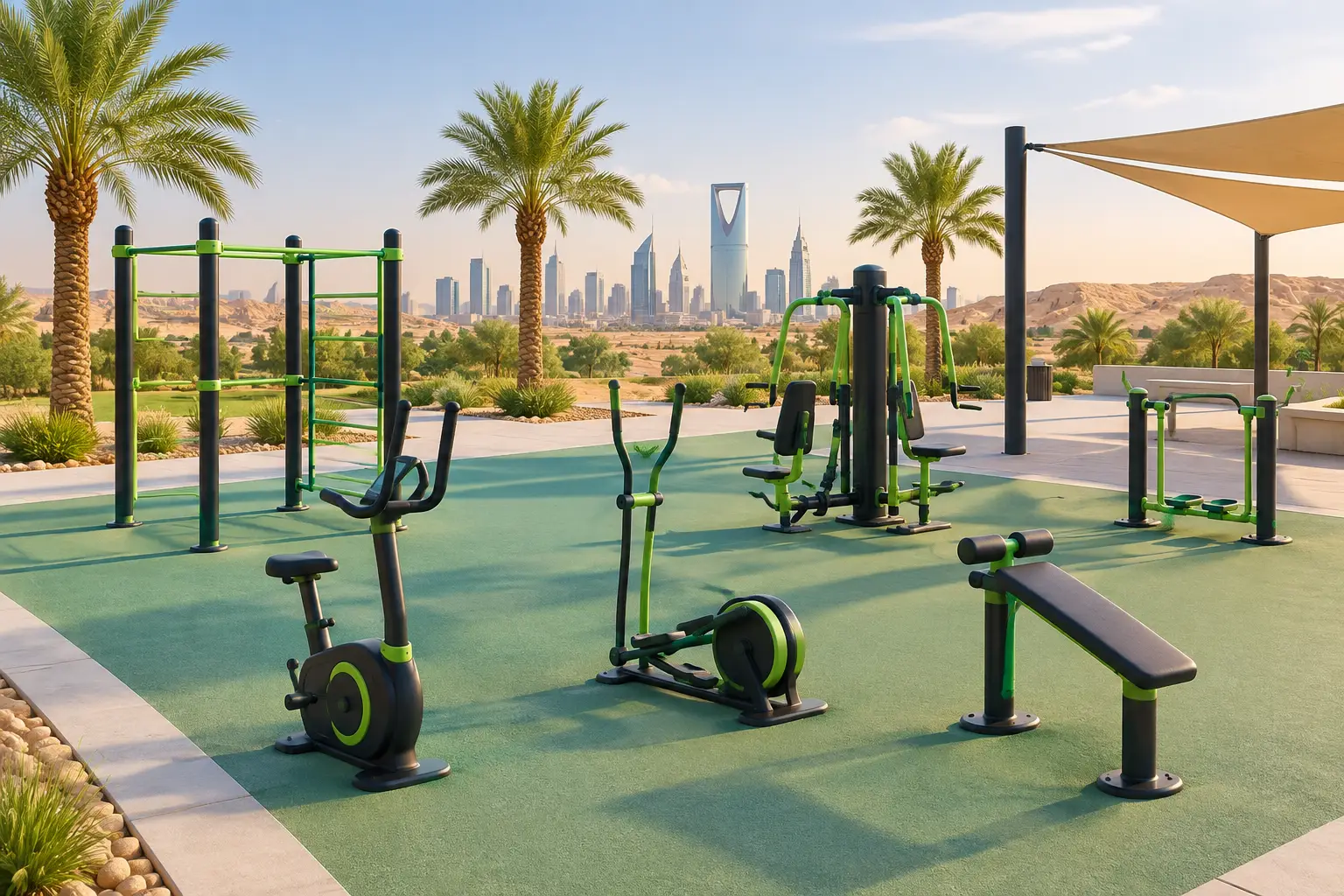
Best Outdoor Fitness Equipment for Saudi Sites
September 11, 2026
Share Post
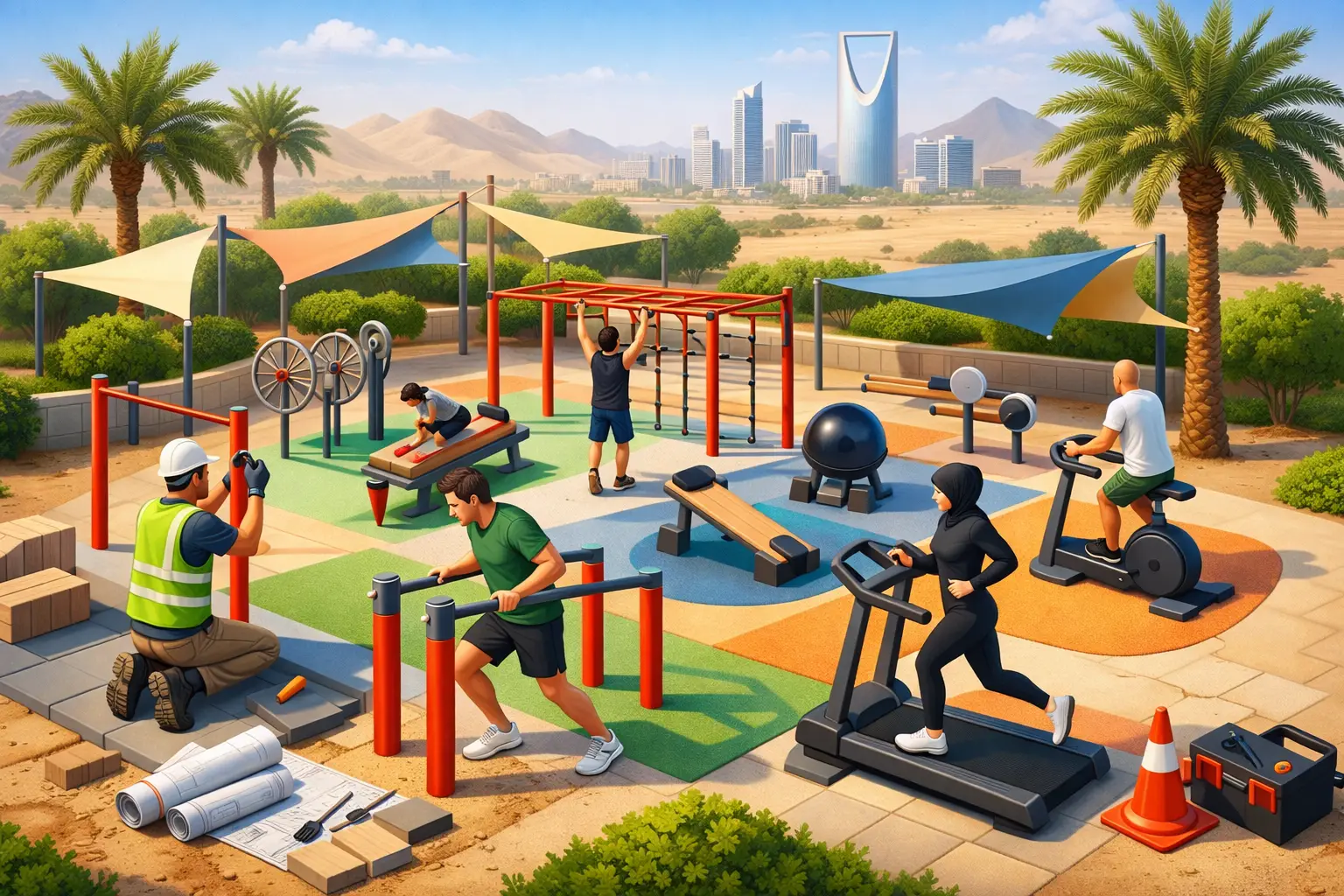
A successful outdoor fitness zone installation is not defined by how many exercise stations fit on a plan. It is defined by whether the space remains safe, usable, and visually credible after years of Saudi heat, dust, heavy use, and routine maintenance. For municipalities, developers, schools, compounds, and destination projects, the right fitness zone becomes a durable public asset that supports daily movement without creating a recurring maintenance burden.
The difference starts before equipment reaches the site. Ground conditions, sun exposure, drainage, user profiles, safety clearances, surfacing, and access all need to be resolved as one engineered system. A supplier can deliver equipment. A specialist contractor delivers a complete environment built for long-term performance.
Start With the Purpose of the Fitness Zone
Outdoor fitness areas serve different operational goals. A public park may need high-capacity stations that accommodate varied age groups and frequent use. A residential compound may prioritize a compact, premium-looking wellness area near walking paths and family amenities. A school may require intuitive equipment, clear safety zones, and surfaces that support supervised physical activity. Hospitality and destination developments often need a facility that performs well while complementing a carefully planned landscape.
This early definition affects every later decision. Equipment selection, footprint, flooring thickness, shade strategy, and maintenance planning should follow the project’s intended user experience. Installing a generic collection of machines without a clear movement flow often produces a space that looks complete but receives limited use.
A strong concept typically organizes stations by training type. Cardio, mobility, strength, calisthenics, and stretching areas should be positioned so users can move naturally through the space without crossing active exercise zones. Where the site allows, a short walking or jogging loop can extend the value of the fitness area and encourage broader community participation.
Site Planning Sets the Performance Standard
The site is not simply a location for equipment. It is a construction condition that determines foundation design, drainage requirements, access routes, and heat exposure. Before installation, the contractor should assess levels, soil conditions, underground utilities, nearby irrigation, pedestrian circulation, and emergency access.
In Saudi Arabia, direct sun is a major design factor. Metal components can become uncomfortable to touch during peak temperatures, while poorly selected surface systems can fade, harden, or deteriorate under ultraviolet exposure. Orientation, shade structures, trees, and the placement of high-contact equipment should be considered early rather than added as an afterthought.
Drainage also requires precise planning. Even in dry climates, short periods of heavy rain can expose weak points in a fitness zone. Water that collects below resilient flooring, around foundations, or at surface transitions can affect safety and shorten service life. The base, falls, edging, and drainage route must work together to move water away from the active area.
Access, Visibility, and User Confidence
An outdoor fitness zone is more likely to be used when it is easy to find, easy to enter, and visible from surrounding paths or amenities. Clear pedestrian access supports families, older users, and people with limited mobility. For public and institutional projects, visibility can also improve passive supervision and discourage misuse.
Lighting should be designed around actual operating hours. A zone intended for early morning or evening use needs even illumination, controlled glare, and safe circulation at entry points. Lighting columns, landscape elements, and signage must not reduce equipment safety clearances or create obstacles within movement areas.
Choose Equipment for Real Use, Not Catalog Appeal
Outdoor gym equipment should be selected for durability, usability, and the expected volume of traffic. Commercial-grade systems designed for public environments typically use corrosion-resistant finishes, protected moving components, tamper-resistant fixings, and stable structural frames. These details matter more than a large equipment count.
For many developments, a balanced mix of low-impact cardio equipment, bodyweight stations, and mobility components creates the broadest appeal. Stations should support different fitness levels and avoid making the area feel exclusive to experienced athletes. Clear instructional panels can help first-time users understand proper movement and reduce misuse.
There are trade-offs. Equipment with more moving parts may create a richer training experience, but it also demands more disciplined inspection and maintenance. Fixed calisthenics structures are often simpler to operate and maintain, though they may not serve every user profile. The correct choice depends on the operating team, anticipated traffic, and the role of the facility within the wider development.
Surfacing Is a Safety and Asset-Protection Decision
The flooring beneath and around the equipment is a critical part of outdoor fitness zone installation. It provides impact attenuation, slip resistance, comfort, visual definition, and a clean transition between the fitness zone and the surrounding landscape.
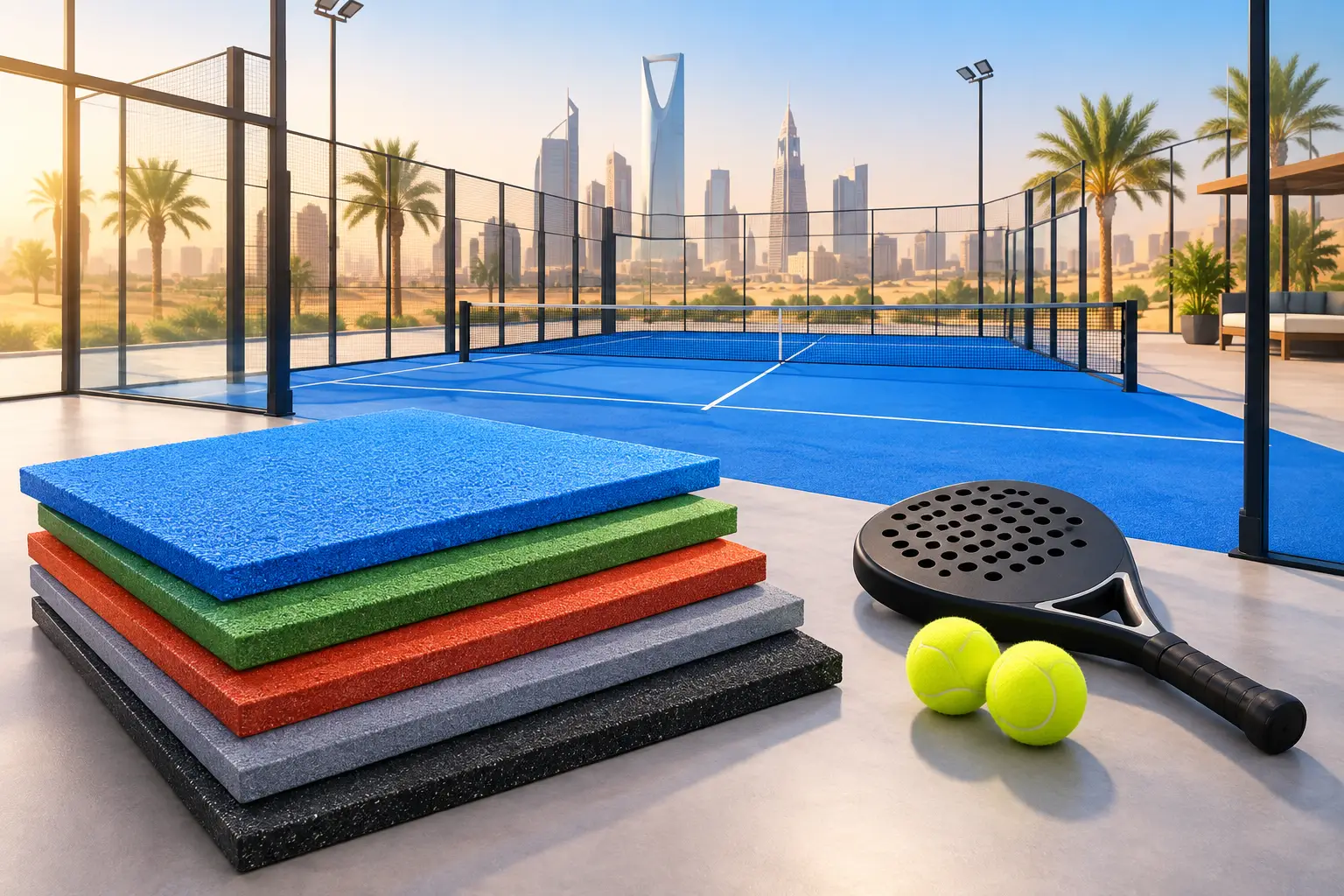
EPDM rubber flooring is a common solution for outdoor fitness areas because it can provide resilient cushioning, color stability, and a finished appearance suited to parks, schools, compounds, and hospitality environments. The system must be specified correctly for the intended equipment, expected fall risk, base condition, and local climate. Thickness should not be chosen only by budget. It should reflect safety requirements and actual use conditions.
A high-quality surface also depends on what sits below it. The substrate must be stable, properly prepared, and designed to support drainage. Poor base preparation can lead to cracking, settlement, ponding, or edge separation, even when premium surface materials are used. Precision installation standards protect the performance of the entire system.
Where the fitness area sits beside running tracks, artificial turf, sports courts, or play spaces, material transitions need particular attention. Clean edges, coordinated elevations, and compatible drainage create a professional result while reducing trip hazards and future repair work.
Build for Saudi Heat, Dust, and Outdoor Exposure
Products that perform well in mild climates are not automatically suited to Saudi conditions. Long-term exposure to heat, ultraviolet radiation, airborne dust, and intensive use can place significant demands on equipment coatings, fasteners, flooring binders, and drainage details.
Material selection should prioritize outdoor-rated components, corrosion resistance, UV-stable surface systems, and details that limit water retention and dirt accumulation. Anchors and foundations must be engineered to secure equipment under repeated loading. Connection points should be protected where possible, while remaining accessible for inspection.
Construction sequencing matters as well. Civil works, foundations, base preparation, equipment installation, surfacing, curing, and final inspections must be coordinated so that one trade does not compromise another. A full-scope turnkey contractor maintains control over these interfaces and provides clearer accountability from concept through handover.
Compliance Should Be Designed Into the Project
Safety is not a final checklist item. It begins with layout geometry, equipment spacing, surfacing, foundations, and installation controls. Fitness stations require sufficient use zones and circulation space to prevent conflicts between users. Equipment instructions, warning labels, and age guidance should be readable and appropriate for the intended audience.
Projects should also consider local authority requirements, accessibility expectations, and relevant internationally accepted safety standards where applicable. Documentation matters for institutional clients. Product data, material specifications, inspection records, and handover information help operators manage the facility after opening day.
For public-sector and large development projects, this level of control is especially valuable. It reduces uncertainty during approvals, supports informed maintenance planning, and demonstrates that the facility was delivered as a professionally engineered asset rather than an assembled product package.
Plan Maintenance Before Handover
Low maintenance does not mean no maintenance. Outdoor fitness zones require a practical care plan that matches their operating environment. Routine checks should cover loose fixings, worn moving parts, damaged labels, surface seams, drainage outlets, and signs of settlement around foundations.
Cleaning is also performance maintenance. Removing dust, debris, and organic buildup helps preserve surface appearance and reduces slip risk. In high-traffic public areas, more frequent inspections may be necessary. Operators should have a clear process for isolating damaged equipment, recording issues, and arranging repairs before a minor defect becomes a safety concern.
StepX Sports approaches these facilities as part of a wider recreational environment, coordinating equipment, resilient surfacing, civil works, and long-term support under one delivery framework. This approach is particularly relevant where an outdoor fitness area must align with courts, tracks, landscape zones, or a larger community master plan.
A Fitness Zone Should Add Lasting Value to the Site
The best outdoor fitness spaces encourage people to stay active because they feel safe, accessible, and purposeful. They support Vision 2030 priorities around healthier lifestyles while giving developers and institutions a visible amenity with everyday value.
For a project in Riyadh, Jeddah, Dammam, Neom, or another demanding GCC setting, the central question is not whether outdoor equipment can be installed. It is whether the entire zone has been designed, specified, and constructed to keep performing after the opening ceremony. When that answer is built into the project from the start, the fitness zone earns its place as a lasting community asset.