
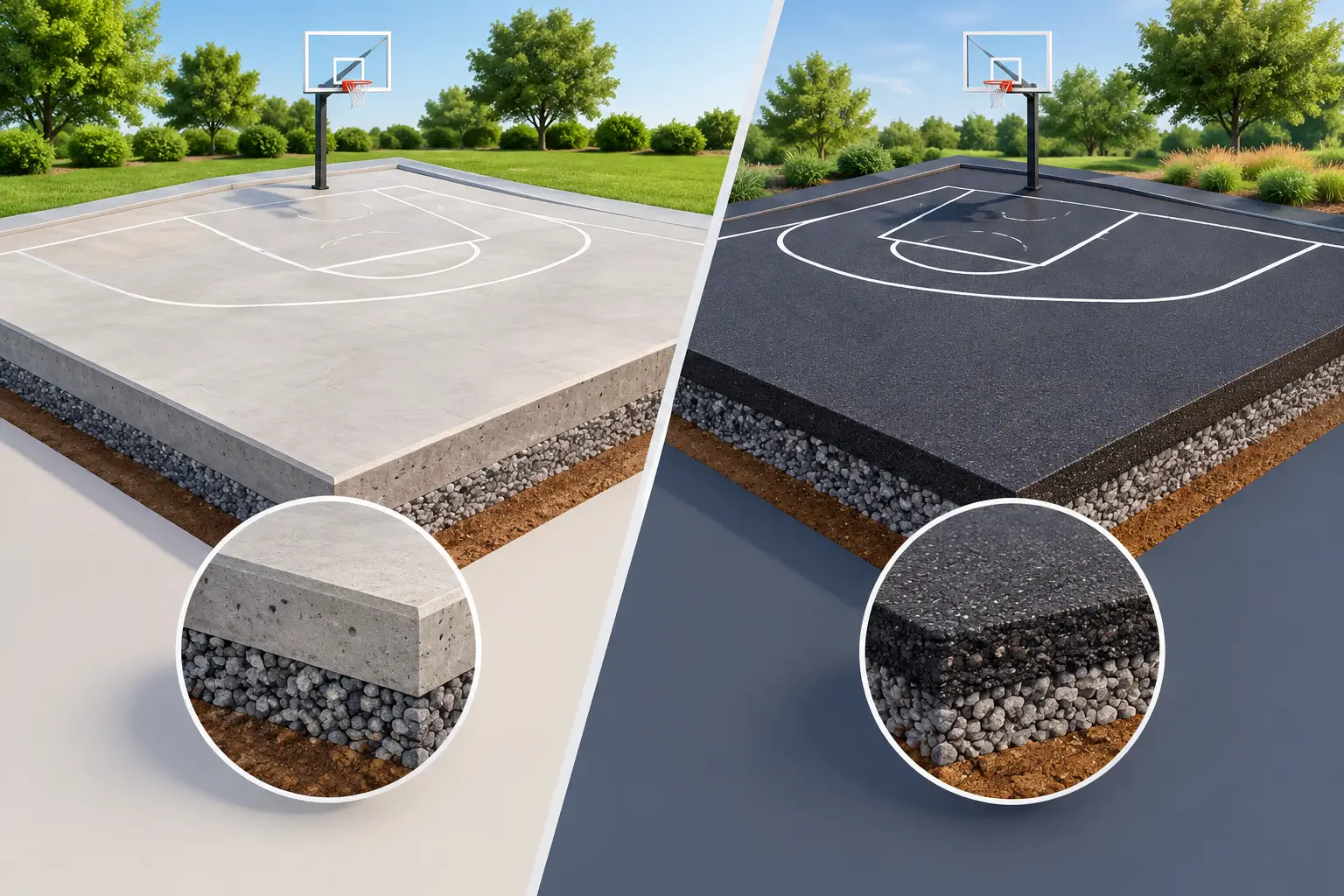
Top School Sports Amenities for Lasting Performance
Recent Posts
Adventure Parks Built for Saudi Conditions
November 1, 2026
Artificial Turf Dust: Causes, Risks, and Control
October 31, 2026
Acrylic Court System Review for Saudi Projects
October 30, 2026
What Drives Strong Padel Court Profitability?
October 29, 2026
Share Post
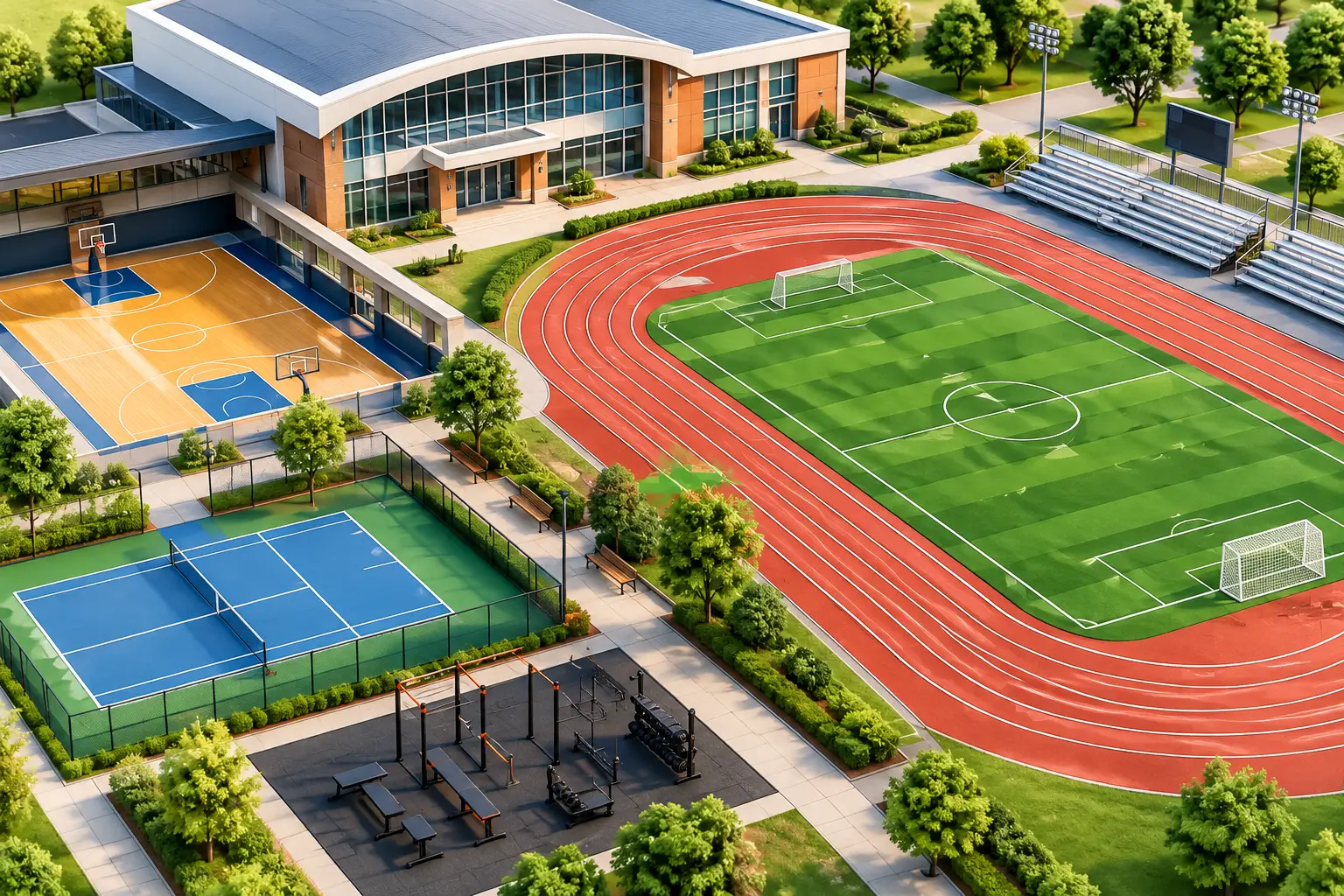
A school sports facility is tested long before a ribbon-cutting ceremony. It is tested by morning PE classes, competitive fixtures, recess traffic, equipment movement, dust, sunlight, and years of daily use. The best top school sports amenities are not selected because they look impressive on opening day. They are planned as long-life assets that improve student wellbeing, support curriculum delivery, and perform reliably under demanding Saudi conditions.
For school owners, operators, and development teams, the goal is not simply to add a court or install a running track. It is to create a coordinated environment where students can move safely, teachers can supervise effectively, and maintenance teams can protect the investment without excessive disruption or cost.
What Makes Top School Sports Amenities Work
A successful school sports environment begins with the way the campus will actually operate. A primary school may require low-impact play zones, adaptable courts, and clear separation between active and quiet areas. A secondary school or university campus may need competition-standard dimensions, spectator circulation, team areas, lighting, and space for structured training.
The right solution depends on the age group, available land, curriculum requirements, anticipated participation, and operating schedule. A compact urban campus may gain more value from a multi-use games area than from several undersized single-sport courts. A larger education development may justify a dedicated athletics zone, football field, padel courts, outdoor fitness stations, and shaded spectator areas.
Material performance is equally important. In Saudi Arabia, high surface temperatures, ultraviolet exposure, thermal movement, windblown sand, and heavy foot traffic can shorten the life of poorly specified systems. Surface selection must account for drainage, base preparation, shock absorption, slip resistance, color stability, and repairability. A school facility should be built for the conditions it will face every day, not specified from a generic catalog.
Build the Sports Master Plan Before Selecting Surfaces
The most effective school amenities are planned as a connected recreational system. This avoids a common project failure: installing attractive but isolated facilities that compete for space, lack access routes, or create supervision challenges.
A practical master plan identifies the primary activity zones first. These commonly include a multi-sport court, football or artificial turf field, running route, free-play area, and structured fitness zone. From there, the design team can establish safe circulation, shaded rest points, fencing, equipment storage, lighting, drainage, and emergency access.
Site grading and civil works should be resolved early. An exceptional acrylic court cannot compensate for an unstable base, inadequate drainage falls, or poor edge detailing. Likewise, artificial turf performance relies on correct sub-base construction, drainage layers, infill selection, seam installation, and perimeter restraint. Full-scope delivery gives the project team greater control over each of these connected elements.
Multi-Use Courts Deliver High Participation Value
Acrylic multi-sport courts remain one of the most efficient amenities for schools. With appropriate line marking, fencing, and equipment, a single court can support basketball, volleyball, tennis, badminton, and general PE activities. This is particularly valuable where the school day requires frequent transitions between classes.
The system must be selected for the intended level of use. High-traffic schools need a carefully prepared asphalt or concrete base, compatible acrylic layers, accurate line application, and detailing that resists cracking and water ingress. Color selection also matters in hot climates. Lighter, balanced color schemes can reduce heat buildup compared with very dark surfaces while preserving visual contrast for play lines.
Artificial Turf Supports Daily Football and Recreation
Football remains central to many school recreation programs across Saudi Arabia. Artificial turf can provide a consistent, durable playing field with lower water demand than natural grass, but it is not a one-size-fits-all product.
Pile height, fiber structure, density, infill type, underlay requirements, and maintenance routines should reflect whether the field will host younger children, intensive school football, or multi-use recreation. A field that receives constant play needs a system designed for wear resistance, stable ball behavior, and player comfort. Proper maintenance, including brushing, infill management, debris removal, and periodic inspections, protects safety and extends service life.
Running Tracks Encourage Movement Beyond Team Sports
Not every student participates in court or field sports. A running track or clearly defined running loop creates a more inclusive activity asset for warm-ups, athletics training, walking programs, fitness assessment, and informal movement throughout the day.
Polyurethane track systems and EPDM rubber surfaces can provide reliable traction, shock absorption, and visual clarity when installed over correctly prepared bases. The choice between a full competition track, sprint lane, perimeter loop, or compact training area should be based on school enrollment, athletics programming, and land availability. Even a well-designed short running zone can create meaningful daily use when positioned near other active spaces.
Safety Is a Design Requirement, Not an Add-On
School sports amenities must protect students during both structured and unstructured use. That starts with surface performance, but it extends to every interface around the activity area.
Impact attenuation is essential in playground-adjacent areas and outdoor fitness zones. EPDM rubber flooring offers a durable, slip-resistant solution where falls are foreseeable, while also providing color and design flexibility. At the edge of courts and fields, fencing height, gate locations, post protection, and clearance zones must be considered alongside the sport itself.
Visibility is another operational safety issue. Teachers need sightlines across play areas, particularly where different age groups use adjacent spaces. Clear boundaries, logical entry points, non-glare finishes, and appropriate lighting support supervision before, during, and after school hours.
Heat management deserves specific attention. Shade structures, planted edges, covered seating, water access, and thoughtful orientation can make outdoor spaces more usable in warmer months. Shade should not obstruct play or create poor drainage conditions. It must be coordinated with lighting, circulation, and the physical demands of each amenity.
Amenities That Expand the Campus Offer
The strongest school facilities provide more than a conventional court and football field. They create reasons for students, staff, and families to use the campus in different ways.
Outdoor fitness areas can serve older students, staff wellness initiatives, and supervised training programs. Equipment should be commercial-grade, appropriately spaced, securely installed, and supported by impact-absorbing flooring where required. A compact calisthenics zone may be more practical than a large equipment layout if supervision resources are limited.
Padel courts are increasingly relevant for private schools, universities, compounds, and premium education developments. They offer a social, accessible format that can activate the campus beyond standard school hours. However, they require careful planning for enclosure height, lighting, access control, and acoustic impact on nearby classrooms or residences.
Skate parks and pump tracks can add a distinctive recreation component to larger campuses or destination-style educational developments. These facilities need specialist geometry, durable riding surfaces, clear user separation, and an operating plan that considers supervision and protective equipment policies. When properly designed, they support balance, coordination, confidence, and active recreation for students who may not be drawn to traditional team sports.
Specify for Maintenance, Not Just Opening Day
A lower initial cost can become expensive when a school must repair peeling coatings, uneven turf seams, cracked rubber flooring, or drainage failures within a few seasons. Procurement decisions should consider whole-life value: installation quality, material certification, expected use levels, maintenance requirements, warranty coverage, and the contractor’s ability to inspect and support the facility after handover.
Schools benefit from a documented maintenance plan from the beginning. This should establish cleaning routines, turf grooming schedules, coating inspections, hardware checks, drainage reviews, and repair procedures. Small defects are easier and less costly to correct when identified early.
For major new campuses and upgrades, a specialist contractor should also coordinate the technical details that are often overlooked during early planning: sub-base tolerances, expansion joints, drainage channels, fencing foundations, sports line standards, equipment anchoring, and transitions between surfaces. These details determine whether the facility remains safe, attractive, and functional after years of student use.
A Long-Term Asset for Active School Communities
Well-planned sports amenities give a school more than a place to hold PE lessons. They create visible evidence of a commitment to student wellbeing, active lifestyles, and a stronger campus experience. For developers and education operators, they also strengthen the appeal of the wider project by creating spaces that families recognize as purposeful, safe, and built to last.
StepX Sports approaches school recreation as a complete infrastructure responsibility, from concept design and surface selection to precision installation, inspections, upgrades, and long-term support. The right starting point is a clear brief: who will use the space, how often it will be used, and what performance it must deliver over the years ahead.