
Court Cracking Causes in Saudi Sports Facilities
Recent Posts

Adventure Parks Built for Saudi Conditions
November 1, 2026
Artificial Turf Dust: Causes, Risks, and Control
October 31, 2026
Acrylic Court System Review for Saudi Projects
October 30, 2026
What Drives Strong Padel Court Profitability?
October 29, 2026
Share Post
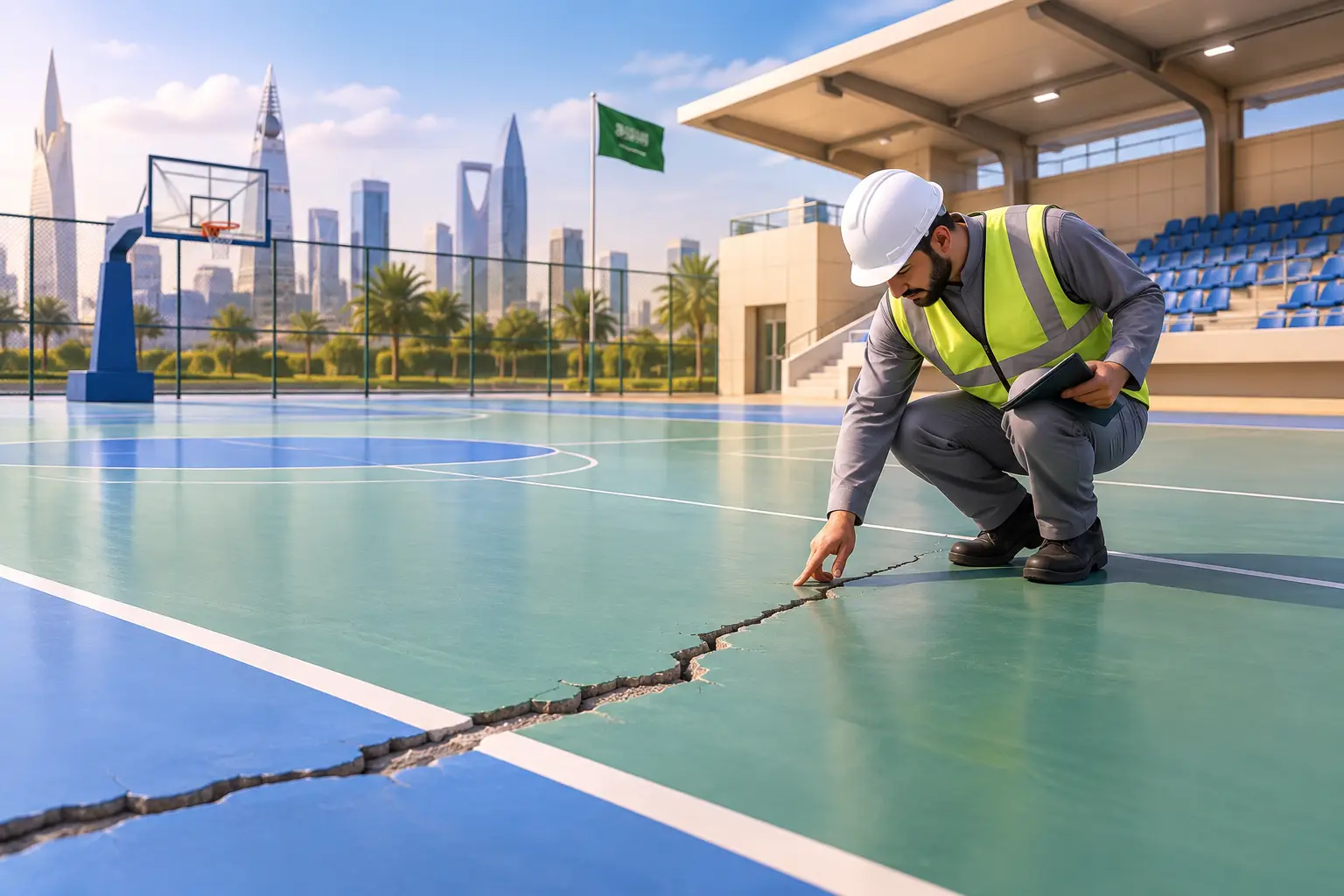
A hairline crack at the edge of a basketball key can look minor during handover. Six months of Saudi sun, thermal movement, player traffic, and occasional standing water can turn it into a visible maintenance issue that affects appearance, drainage, ball response, and long-term asset value. Understanding court cracking causes early allows owners and developers to protect the system beneath the surface, not simply cover a symptom.
For schools, municipalities, compounds, hospitality assets, and destination developments, a sports court is a high-use community asset. It must perform consistently through extreme heat, heavy footfall, cleaning cycles, and years of outdoor exposure. Cracking is rarely caused by one isolated failure. More often, it reflects a mismatch between site conditions, civil preparation, materials, and installation control.
The Main Court Cracking Causes
Acrylic and polyurethane court systems are designed to accommodate normal movement within their intended specification. They cannot compensate indefinitely for an unstable base, trapped moisture, or structural movement below. A correct diagnosis begins by identifying the crack pattern, its location, and whether it is changing over time.
Base movement and inadequate compaction
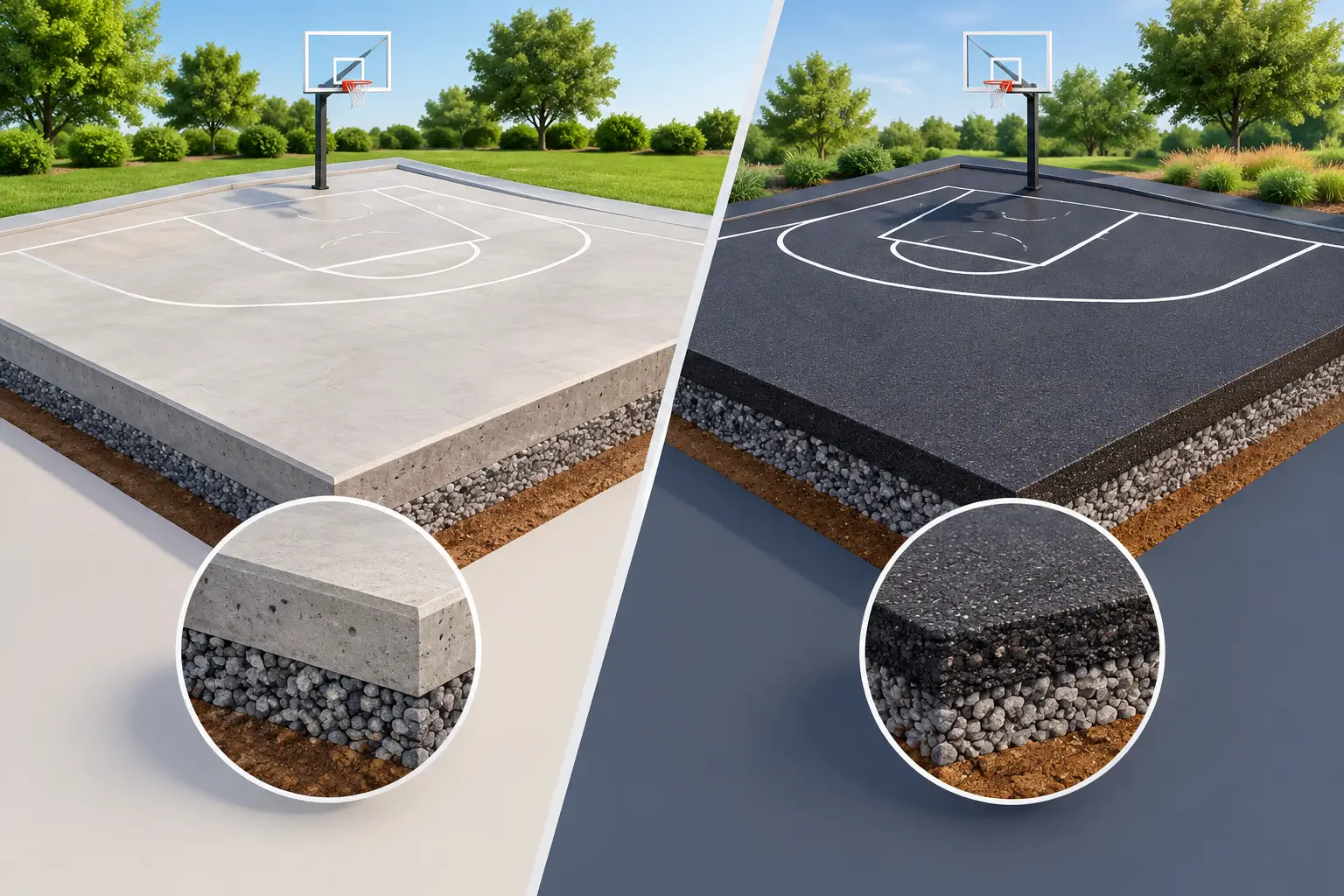
The court surface follows the base. If the subgrade or aggregate layers beneath the slab are poorly compacted, unevenly prepared, or affected by later settlement, the asphalt or concrete base can flex and crack. The coating above will eventually reflect that movement.
This is especially relevant on sites with filled ground, variable soil conditions, utility trenches, or newly developed land. A court may appear level at completion while localized settlement develops after seasonal temperature changes, irrigation leakage, or repeated loading from maintenance vehicles.
Proper geotechnical review, excavation, grading, layer-by-layer compaction, and verification testing are not optional civil-work details. They establish the platform for every subsequent layer. Spending less on the base can create a far greater lifecycle cost when a finished court must be repaired or reconstructed.
Thermal expansion and contraction
Saudi Arabia’s climate places exceptional stress on outdoor recreational surfaces. Dark asphalt absorbs significant heat, while cooler evening conditions create repeated expansion and contraction cycles. Concrete and asphalt move differently, and the coatings applied over them must be selected with that movement in mind.
Thermal cracking often appears at existing joints, along slab transitions, or in broad linear patterns across exposed areas. It can worsen where a court has been installed without appropriate joints, crack-control strategy, or a coating system suited to high surface temperatures.
Material selection matters here. A system engineered for mild climates may look acceptable on installation day yet lose flexibility or adhesion under sustained heat. High-performance surface systems should be specified for local exposure, expected substrate movement, UV resistance, and the intended playing use.
Poor drainage and water intrusion
Water is one of the most common contributors to preventable cracking. While Saudi Arabia receives limited annual rainfall, intense storms can deliver large volumes of water in a short period. If the court falls incorrectly, drains poorly, or connects to inadequate site drainage, water can pond on the playing surface or enter the base through cracks and perimeter edges.
Once water reaches vulnerable layers, it can soften subgrade, weaken asphalt, carry fines away from the base, and accelerate delamination. Water also creates safety concerns, stains, and premature coating wear. On concrete courts, moisture movement through the slab can affect adhesion if the surface system was applied before the substrate had reached an acceptable moisture condition.
A well-designed court needs controlled falls, positive drainage routes, correctly positioned drainage channels where required, and clean transitions at surrounding hardscape. Drainage must be reviewed as part of the full site, not as a last-minute surface detail.
Weak, aging, or improperly cured substrate
A sports coating is only as durable as the asphalt or concrete beneath it. An asphalt base with insufficient thickness, poor binder content, inadequate compaction, or premature traffic loading may crack under normal use. Concrete can develop shrinkage cracks if curing, jointing, reinforcement, or placement practices are not properly controlled.
Timing is equally critical. Applying an acrylic system over asphalt that has not stabilized, or over concrete that retains excess moisture, creates avoidable risk. Surface coatings need a clean, sound, properly prepared substrate. Dust, laitance, oil contamination, loose material, and unaddressed cracks reduce bond strength and can allow defects to return through the finish.
The correct solution depends on the substrate condition. A stable hairline crack may be treated through approved crack-repair and resurfacing procedures. A crack linked to slab movement or base failure requires more than filler. Coating over active movement may improve appearance temporarily, but it does not restore structural integrity.
Incompatible materials and poor installation control
Not every crack originates in the civil base. Incorrect primer selection, inconsistent coating thickness, unsuitable crack fillers, poor mixing ratios, or installation outside the manufacturer’s temperature and humidity requirements can all reduce surface resilience.
These risks increase when a project is fragmented between multiple contractors with unclear responsibility for the base, drainage, coating, and final inspection. A turnkey delivery model creates better control because the team responsible for the finished playing surface also understands the civil and substrate conditions beneath it.
Precision installation standards include moisture checks, substrate inspection, crack mapping, approved repair methods, controlled application rates, curing protection, line-marking accuracy, and final drainage verification. These steps protect visual quality, but more importantly, they protect long-term performance.
How Crack Patterns Help Diagnose the Problem
The location and shape of a crack provide useful evidence. Random, wide cracks may indicate settlement or structural movement. Straight cracks that follow concrete joints may be related to joint design or normal slab movement. Fine surface crazing can point to coating application issues, while cracks concentrated near drains or court edges often suggest water management or perimeter support concerns.
Facility operators should document changes rather than relying on memory. Photograph cracks with a scale reference, record their location, and note whether they widen after heat cycles or rainfall. This creates a useful condition record for maintenance planning and helps a specialist distinguish a cosmetic defect from an active substrate issue.
Preventing Cracks Before Construction Starts
The best time to address court cracking causes is before the first aggregate layer is placed. Design decisions should reflect the intended sport, anticipated traffic, local climate, site topography, soil conditions, and maintenance capability. A lightly used private court and a municipal multi-sport court require different design allowances.
A reliable project approach includes coordinated civil design, verified base preparation, engineered drainage, specification of climate-appropriate surface materials, and clear quality checks at each construction stage. It also requires realistic programming. Rushing curing periods or applying coatings before the base is ready can compromise an asset expected to serve a community for years.
For developers in Riyadh, Jeddah, Dammam, and emerging destination locations, site-specific conditions deserve project-specific solutions. Heat exposure, coastal humidity, desert dust, ground conditions, and stormwater routes vary significantly. Standard details should be adapted, not copied without review.
Repair Strategy: Treat the Cause, Not the Visible Line
Repair decisions should be based on a professional assessment of crack activity and substrate condition. For isolated, stable defects, localized preparation, flexible repair materials, and recoating may restore a consistent playing surface. For widespread reflective cracking, ponding, or movement across multiple areas, the project may require resurfacing, drainage correction, base rehabilitation, or reconstruction of affected sections.
There is a trade-off between short-term appearance and long-term performance. Surface-only repairs can be appropriate when the structure is sound. They are not a substitute for correcting settlement, failed drainage, or a weak base. Owners should ask for a diagnosis that explains why the crack occurred, what repair scope is proposed, and what conditions could cause it to return.
StepX Sports approaches court systems as long-term recreational infrastructure, with civil works, surface engineering, installation control, and maintenance considered as one performance system. That perspective supports safer play, cleaner presentation, and more predictable lifecycle planning.
A court should invite movement, competition, and daily community use without becoming a recurring maintenance concern. When the base, drainage, materials, and installation are aligned from the beginning, cracking becomes a manageable risk rather than a visible reminder of compromised construction.