
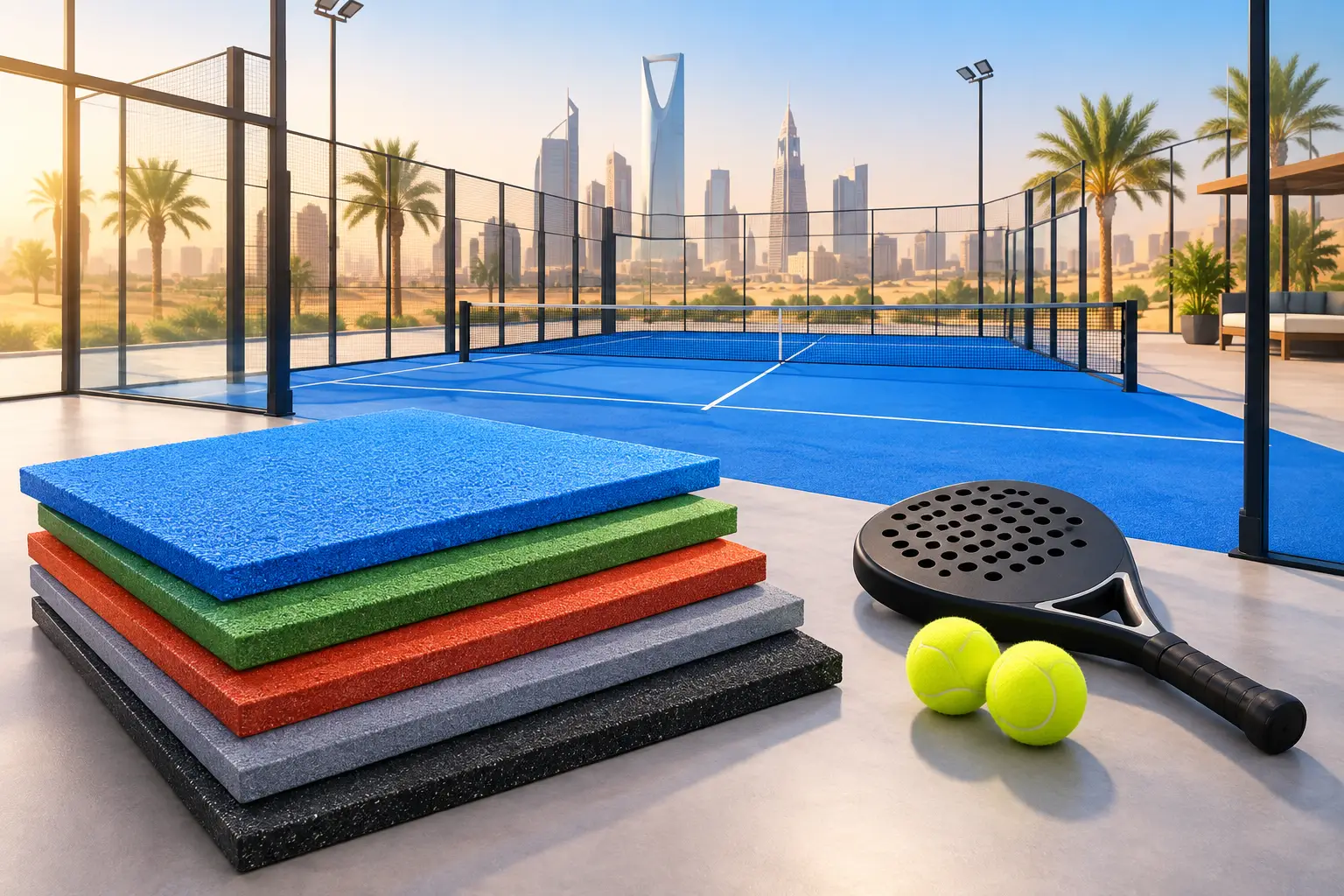
Padel Enclosure Systems for Saudi Sports Sites
Recent Posts
Selecting Turf Infill Materials for Saudi Sports
September 14, 2026
How to Upgrade Campus Recreation for Daily Use
September 13, 2026
Best Padel Court Materials for Saudi Conditions
September 12, 2026
Best Outdoor Fitness Equipment for Saudi Sites
September 11, 2026
Share Post
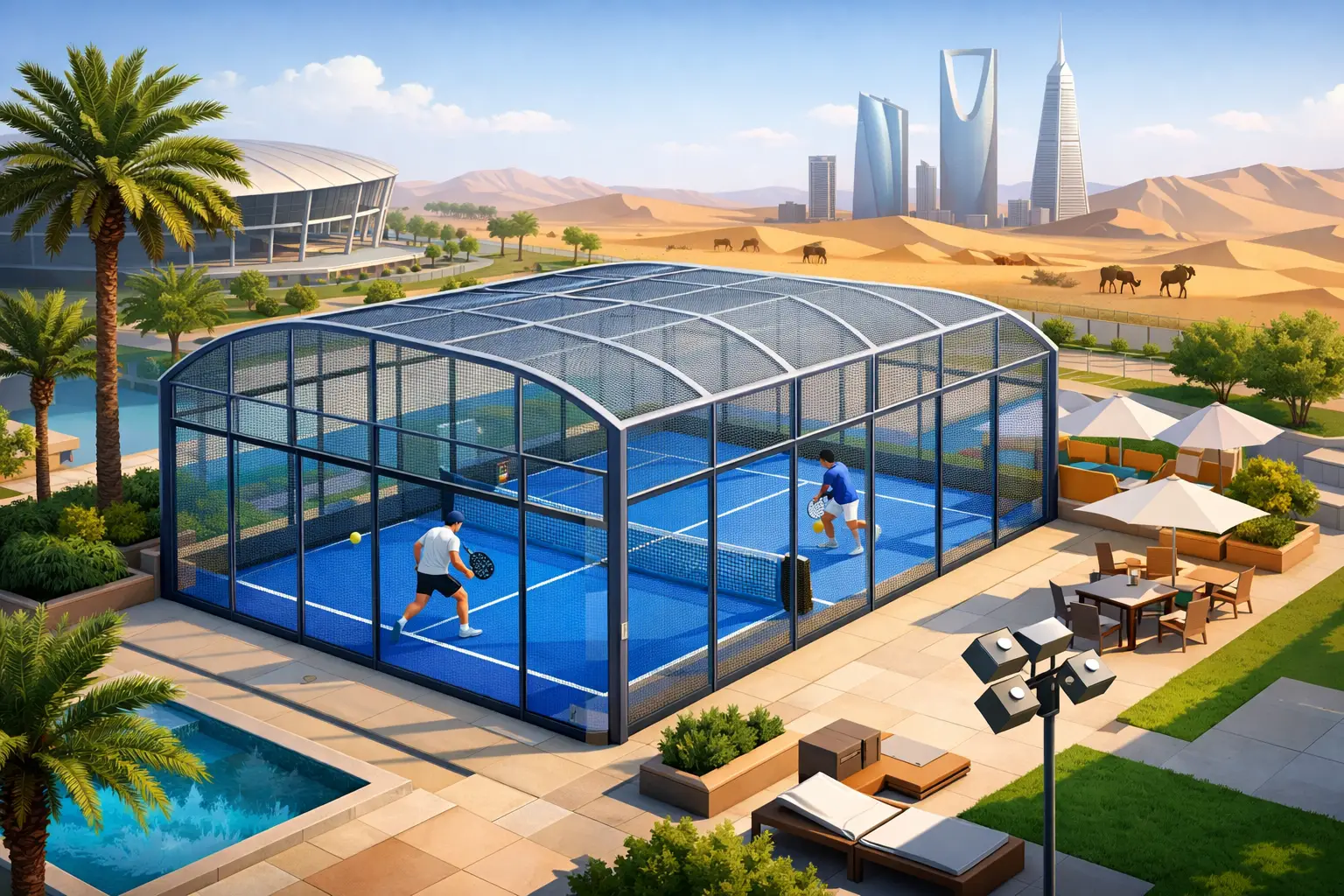
A padel court is only as dependable as the structure that contains the game. Padel enclosure systems do far more than define court boundaries: they control ball retention, protect players and spectators, support the glass-and-mesh playing environment, and shape the premium visual standard expected in a modern development. For projects in Saudi Arabia, the enclosure must also withstand intense solar exposure, heat cycling, wind, dust, and sustained daily use.
For developers, municipalities, schools, hospitality operators, and compound managers, this makes the enclosure a core engineering decision rather than a finishing item. A court may look complete on opening day, but long-term performance depends on the quality of its steelwork, anchoring, glazing, coatings, drainage coordination, and installation control.
What a Padel Enclosure System Must Deliver
A regulation padel court is an enclosed playing structure with glass walls, steel mesh fencing, access gates, and a supporting steel frame. Its purpose is functional as well as architectural. The enclosure keeps the ball in play, enables rebound shots from the glass, separates users from adjacent circulation areas, and gives the court its recognizable professional appearance.
The system must be designed as one coordinated assembly. Frames, panels, fixings, glass, foundations, and surfacing all affect one another. If tolerances are not managed from the civil stage onward, issues can appear later as misaligned panels, uneven door operation, unwanted movement, water collection, or premature wear at fixing points.
A high-performance installation should provide consistent geometry, clear player sightlines, controlled rebound behavior, secure access, and a finish that continues to represent the quality of the wider property. It should also accommodate the operational reality of the site, whether that is a public park with high turnover, a private villa court, a school campus, or a destination facility with extended evening hours.
Glass, Mesh, and Structural Steel Have Different Jobs
Tempered safety glass creates the rebound surface central to padel play. Panel thickness, edge quality, drilling accuracy, gasket detailing, and mounting method all matter. Poorly specified or improperly installed glass can compromise player confidence and create an avoidable maintenance risk.
Steel mesh completes the side and upper enclosure zones, retaining the ball while allowing airflow and visibility. Mesh design should balance strength with openness. A heavier-looking enclosure is not automatically a better one if it limits sightlines, creates awkward play conditions, or adds unnecessary visual weight to a premium development.
The steel frame carries the complete system. It must resist use-related impacts and environmental loads without distortion. For Saudi projects, galvanized steel and suitable protective coating systems are essential considerations. Heat, ultraviolet exposure, airborne dust, and coastal conditions in locations such as Jeddah and Dammam can accelerate deterioration where material selection or surface preparation is weak.
Foundations Set the Accuracy of the Entire Court
The enclosure is only as stable as its connection to the sub-base and foundation system. Anchor positions must be set precisely before installation begins, with levels verified against the finished sports surface, drainage falls, and court layout.
This is where full-scope project management adds measurable value. The civil package, padel surfacing, enclosure, lighting, and electrical works should be coordinated before materials arrive on site. Treating each scope as a separate purchase often creates gaps in accountability. A complete design-and-build approach establishes one installation sequence and one party responsible for final performance.
Designing Padel Enclosure Systems for Saudi Conditions
Saudi Arabia presents conditions that should influence specification from the earliest design stage. Summer heat places repeated expansion and contraction demands on steel, glass fittings, coatings, and connection points. Direct sunlight can raise surface temperatures far above ambient air temperature, particularly where courts are installed in open hardscape areas with limited shade.
Wind is another project-specific factor. An exposed rooftop, coastal site, desert-edge destination, or open public realm can experience very different wind pressures. The enclosure frame, mesh panels, glass fixings, and foundation design must suit the actual site condition, not a generic product drawing.
Dust management also deserves practical attention. Dust does not usually damage an enclosure by itself, but it can collect at base rails, around drainage points, and within moving gate hardware. Designs that allow straightforward cleaning and inspection reduce operational effort over the life of the asset.
For outdoor courts, drainage coordination is particularly important. Water should not stand at the enclosure perimeter or around access points. Even in a dry climate, occasional heavy rainfall can expose weak falls, blocked outlets, or poorly detailed transitions between the court slab and surrounding paving.
Key Specification Decisions Before Procurement
The right enclosure depends on the use case. A premium hospitality project may prioritize refined finishes, integrated lighting, acoustic sensitivity, and a strong guest experience. A municipal facility may place greater emphasis on impact resistance, access management, replacement-part availability, and maintenance efficiency. Educational sites need durable components, controlled entry, and clear separation from surrounding pedestrian routes.
Before procurement, decision-makers should establish the intended level of play, projected usage, operating hours, exposure conditions, and maintenance capability. This prevents a common error: specifying a visually attractive court system that does not match the facility’s actual intensity of use.
The following decisions should be resolved in the design brief:
- Whether the court is outdoor, covered, or located within a larger indoor structure.
- The required steel protection system for the site’s climate and exposure level.
- Glass thickness, panel configuration, and safety detailing appropriate to the facility type.
- Foundation design, drainage strategy, and finished-level tolerances.
- Gate locations, emergency access needs, and circulation routes around the court.
- Lighting pole positions, cable routes, and potential conflicts with the enclosure frame.
These are not isolated technical details. Together, they determine how well the court performs, how easily it can be maintained, and whether the finished facility feels integrated into its setting.
Installation Quality Is Visible in the Details
Padel court installation requires disciplined sequencing. The base must be checked for level, dimensions, and anchor accuracy before steel erection starts. Frames should be aligned and secured before glass installation, while mesh panels, gates, lighting interfaces, and final hardware require inspection before handover.
Small deviations can have a large visual and operational effect. Uneven panel spacing, inconsistent glass lines, poorly adjusted gates, exposed sharp edges, or coating damage at connection points can reduce both safety and perceived quality. These defects are easier and less costly to prevent during installation than to correct after a court is in operation.
Experienced installation teams also protect completed works during construction. Glass panels, artificial turf, acrylic finishes, electrical equipment, and nearby hardscape can all be damaged when trades are not properly coordinated. A contractor with internal project management control can manage these interfaces rather than leaving the client to resolve them between separate suppliers.
StepX Sports applies this full-scope approach across padel court systems, aligning material selection, civil preparation, surface engineering, enclosure installation, and final inspection around the conditions of each Saudi site.
Maintenance Planning Protects the Investment
A padel enclosure does not require complex daily intervention, but it does require a planned inspection routine. Operators should check glass fittings, fasteners, mesh tension, gate latches, protective coatings, base connections, and drainage edges at regular intervals. High-use facilities should inspect more frequently, especially after exceptional weather or events.
Cleaning should remove dust buildup without using methods that damage coatings, seals, or adjacent playing surfaces. Any chips in protective steel coatings should be addressed early. Left untreated, minor damage can become a corrosion point, particularly in humid or coastal environments.
It is also wise to retain records of installed components, glass specifications, coating details, and inspection findings. This supports faster repairs, consistent replacement decisions, and clearer lifecycle budgeting. For institutions and developers managing multiple assets, this level of documentation is part of responsible facility ownership.
A well-engineered padel enclosure gives players the confidence to compete freely and gives owners confidence that their investment can perform through years of use. Specify it with the same care given to the playing surface and foundations, and the completed court will remain a credible community asset long after the opening event.