
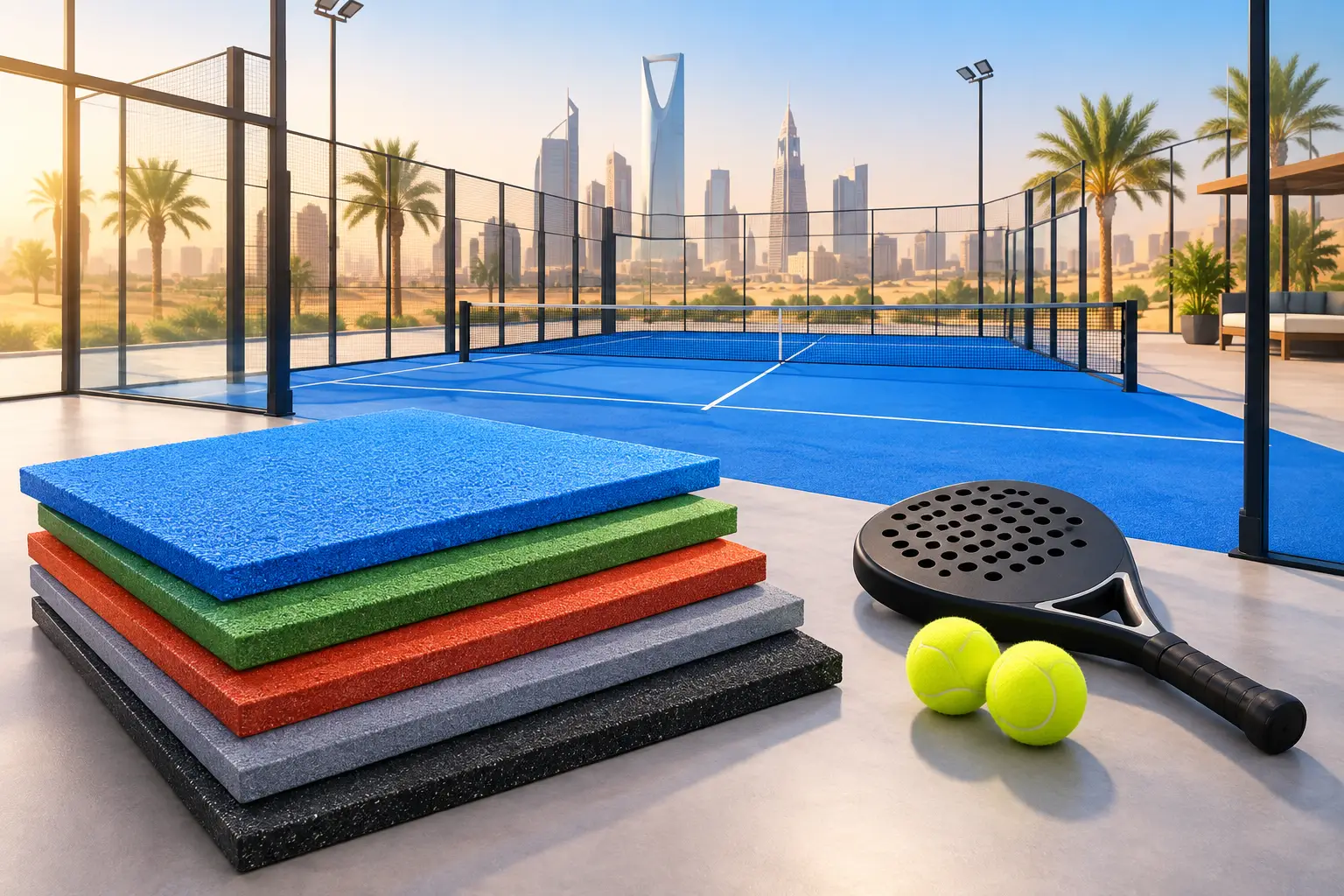
Padel Court Installation for Resorts That Lasts
Recent Posts
Selecting Turf Infill Materials for Saudi Sports
September 14, 2026
How to Upgrade Campus Recreation for Daily Use
September 13, 2026
Best Padel Court Materials for Saudi Conditions
September 12, 2026
Best Outdoor Fitness Equipment for Saudi Sites
September 11, 2026
Share Post
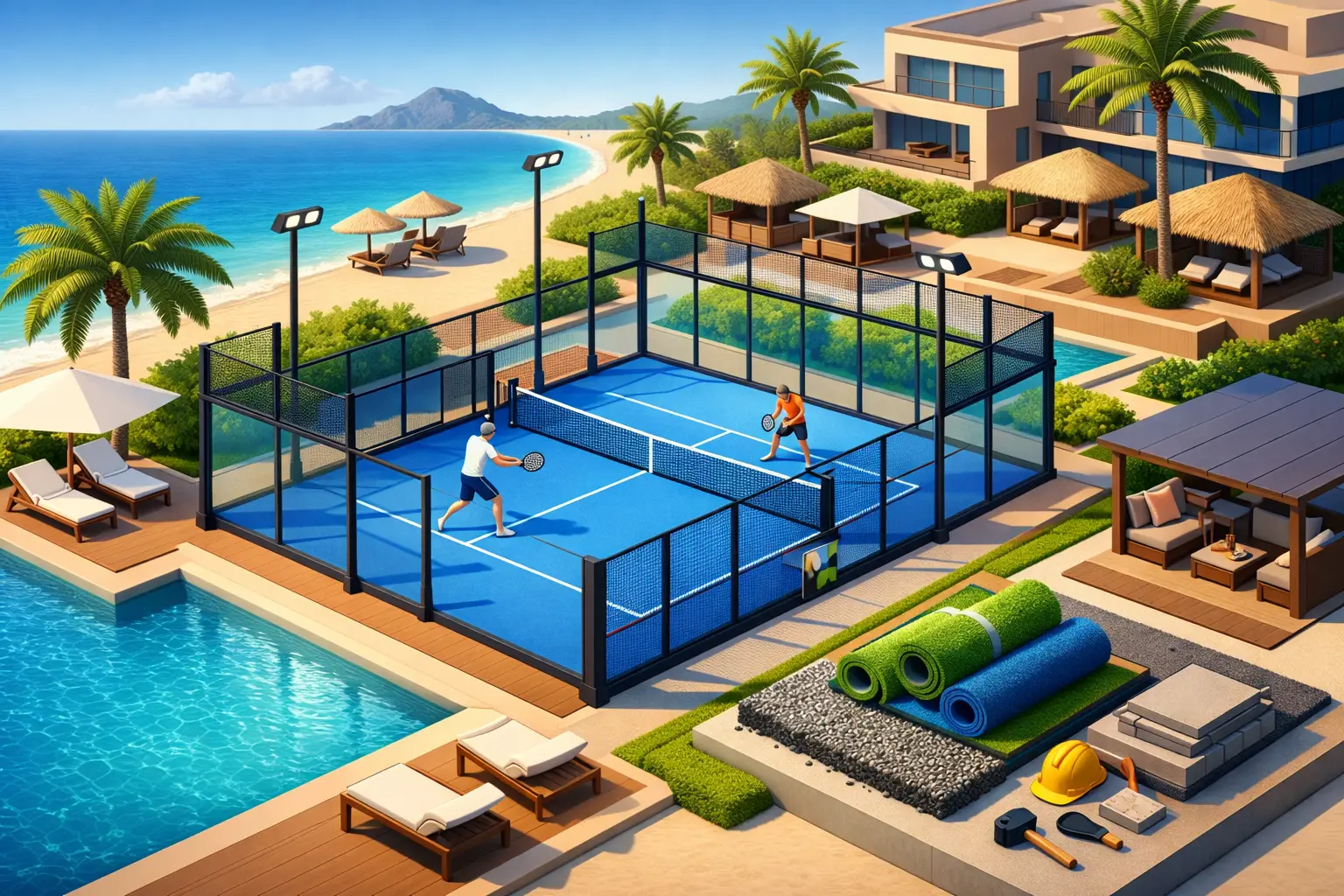
A resort padel court is not a stand-alone sports feature. It is a guest experience asset, a visible part of the property landscape, and an operating responsibility that must perform every day. Padel court installation for resorts requires more than selecting a court model. It requires site engineering, climate-ready materials, controlled construction, and a plan for how guests will access, use, and maintain the facility.
For hospitality developers in Saudi Arabia and the GCC, the strongest results come from treating padel as part of the destination from the first concept stage. A well-positioned, professionally built court can create energy around a beach club, wellness zone, residential precinct, or family recreation area. A poorly specified court can introduce glare, heat discomfort, drainage failures, excessive noise, and avoidable maintenance costs.
Why resorts need a different padel court approach
Resort courts face a different operating profile from municipal or club facilities. Guests may be beginners, families, corporate groups, or serious players looking for evening competition. They expect the court to look premium, feel safe, and be available when they want to play. The installation must therefore balance sporting performance with visual integration, accessibility, guest circulation, and operational efficiency.
Saudi conditions add another layer of technical control. Intense solar exposure, high surface temperatures, wind-driven dust, and occasional heavy rainfall can test every part of the installation. Steelwork, turf fibers, glazing, lighting, adhesives, drainage details, and perimeter finishes must be selected as one coordinated system rather than as separate purchases.
A resort may also prioritize different outcomes depending on its positioning. A luxury wellness property may favor landscape integration and quiet evening play. A large destination development may need multiple courts, tournament-ready lighting, booking integration, shaded social areas, and high guest throughput. There is no single correct court specification. The right solution follows the site brief, projected usage, and the standard the operator intends to maintain.
Start padel court installation for resorts with the site
The court location shapes guest satisfaction long before the first match begins. A padel court should be easy to find without dominating the arrival sequence or disturbing private accommodation. It needs clear pedestrian access, sufficient service access during construction, and space around the enclosure for safe circulation, seating, and maintenance.
Orientation deserves careful study. Sun position affects visibility and player comfort, particularly during late-afternoon and sunset periods when resort activity often peaks. Lighting design must complement the orientation, avoiding spill into guest rooms, villas, dining terraces, or neighboring public spaces. In exposed settings, wind conditions can affect play and increase dust accumulation on turf and glass.
Below-ground conditions matter just as much. A proper survey should establish levels, soil behavior, existing utilities, drainage routes, and the required formation for the court foundation. Installing a premium enclosure on an inadequately prepared slab is a false economy. Settlement, standing water, and uneven play conditions typically originate in civil works, not in the visible court components.
Design for water movement, not just dry weather
A court surface must shed water efficiently during rain events and cleaning cycles. The surrounding landscape should not direct runoff toward the playing area, while finished levels should prevent water from collecting at gates, perimeter edges, or access paths.
Drainage design depends on the site, foundation build-up, local grading, and discharge options. In some resorts, integrated linear drainage and carefully formed surrounding paving are appropriate. In others, the priority is managing larger landscape flows before they reach the court zone. The key is to design the complete water path, not simply add a drain after construction begins.
Specify the court as a heat-ready system
The visual elements of padel – glass walls, steel frames, artificial turf, and lighting columns – are only part of the performance equation. Each material should be assessed for long-term outdoor exposure, corrosion risk, UV resistance, thermal movement, and maintenance access.
Structural steelwork requires a coating system suited to the environment. Coastal resorts may require a higher level of corrosion protection than inland developments, while all sites benefit from precise fabrication, secure anchoring, and rigorous installation alignment. Glass panels must be specified for impact resistance and installed with controlled tolerances to support safe rebound behavior and a consistent playing experience.
The playing surface should be selected for its pile construction, UV stability, infill system where applicable, drainage performance, and feel underfoot. A surface that looks acceptable at handover but loses fiber resilience under heat and heavy guest use will not support the resort’s premium positioning. Regular brushing, cleaning, and infill management should be considered during specification, especially where sand and dust are common.
Lighting is another critical decision. Evening play can significantly expand court utilization, but poor lighting creates glare, shadowing, and complaints from surrounding guest areas. LED fixtures should provide uniform illumination across the playing area while being positioned and aimed to manage spill. The design should also consider maintenance access, control zones, timing schedules, and the resort’s wider nighttime ambiance.
Build guest comfort into the court zone
The court itself may be the main attraction, but the surrounding environment determines whether guests stay, socialize, and return. Resorts should allocate space for shaded seating, drinking water, equipment storage, benches, and a safe waiting area outside the gates. These additions do not need to overwhelm the design. They need to be durable, accessible, and coordinated with the property’s architecture and landscape palette.
Shade can be particularly valuable in Saudi Arabia, but it must be planned carefully. Canopies, trees, and adjacent structures should not interfere with clear playing height, lighting distribution, or airflow. A shaded spectator zone is often more practical than attempting to cover the court, although the right approach depends on the resort concept and operating hours.
Access should accommodate all expected users. This includes stable pathways, gate locations that do not create congestion, and sufficient clearance for staff performing cleaning or maintenance. If the court is part of a larger wellness precinct, consider how guests transition from changing areas, pools, fitness spaces, and food service without crossing vehicle routes or interrupting other activities.
Control installation quality from civil works to handover
Turnkey delivery creates accountability across the stages that most affect court performance. The process should begin with concept coordination and technical drawings, followed by material approvals, site preparation, foundation construction, court assembly, surface installation, lighting, inspections, and final commissioning.
During construction, precision matters. Foundation levels, anchor positions, enclosure alignment, glass installation, turf seams, and gate operation should all be checked against the approved design. Small installation deviations can become visible quickly in a glass-and-steel court system, particularly under nighttime lighting.
A professional handover should include more than a finished court. Resort operations teams need practical information on cleaning procedures, turf care, glass inspection, lighting controls, recommended maintenance intervals, and warranty responsibilities. If the project includes several courts or a high-traffic destination setting, a scheduled maintenance plan is a sensible operational safeguard.
StepX Sports approaches these facilities as full-scope recreational assets, coordinating engineered surfaces, civil works, installation, and long-term support for demanding Saudi environments. That integrated control is particularly valuable when padel must sit alongside landscaping, hospitality finishes, lighting, and broader sports or wellness infrastructure.
Plan for operation after opening day
A court that is built well can still underperform if it is difficult to operate. Resorts should decide early whether padel will be complimentary, reservation-based, instructor-led, or supported by programmed events. These choices influence the number of courts, the need for reception visibility, equipment storage, signage, and peak-time staffing.
Maintenance should be routine rather than reactive. Daily debris removal, regular turf brushing, glass cleaning, hardware checks, and periodic lighting inspections protect both appearance and safety. The operating team should also monitor how guests actually use the area. If queues form at sunset, shaded waiting space or a second court may become more valuable than additional decorative features.
For destination developers, padel can serve a wider purpose than recreation alone. It supports active lifestyles, strengthens the social rhythm of a property, and gives guests a reason to extend their time in a shared outdoor setting. The lasting value comes from a court that continues to look composed, play consistently, and operate confidently long after opening season.