
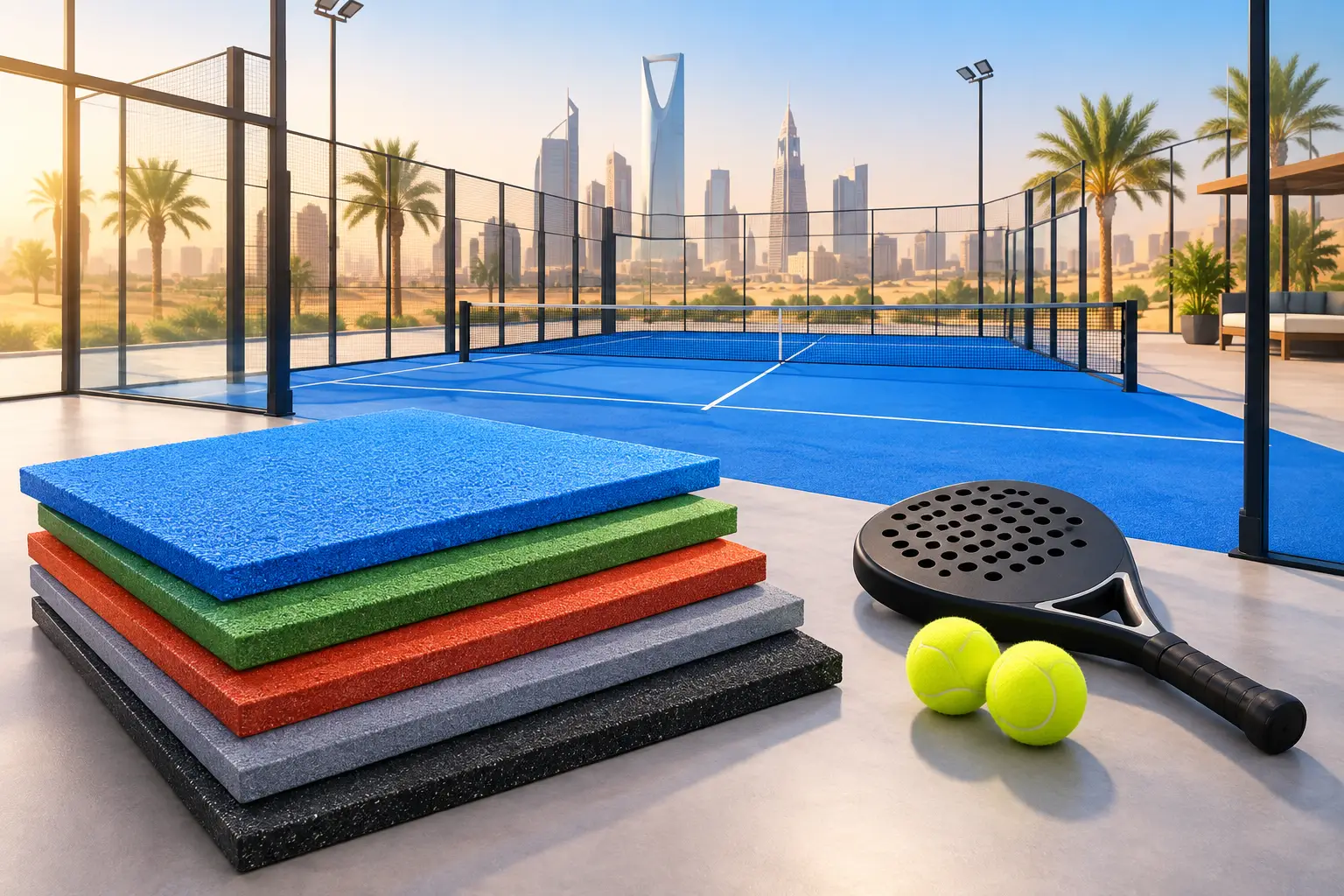
Acrylic Court Resurfacing in Saudi Arabia
Recent Posts
Selecting Turf Infill Materials for Saudi Sports
September 14, 2026
How to Upgrade Campus Recreation for Daily Use
September 13, 2026
Best Padel Court Materials for Saudi Conditions
September 12, 2026
Best Outdoor Fitness Equipment for Saudi Sites
September 11, 2026
Share Post
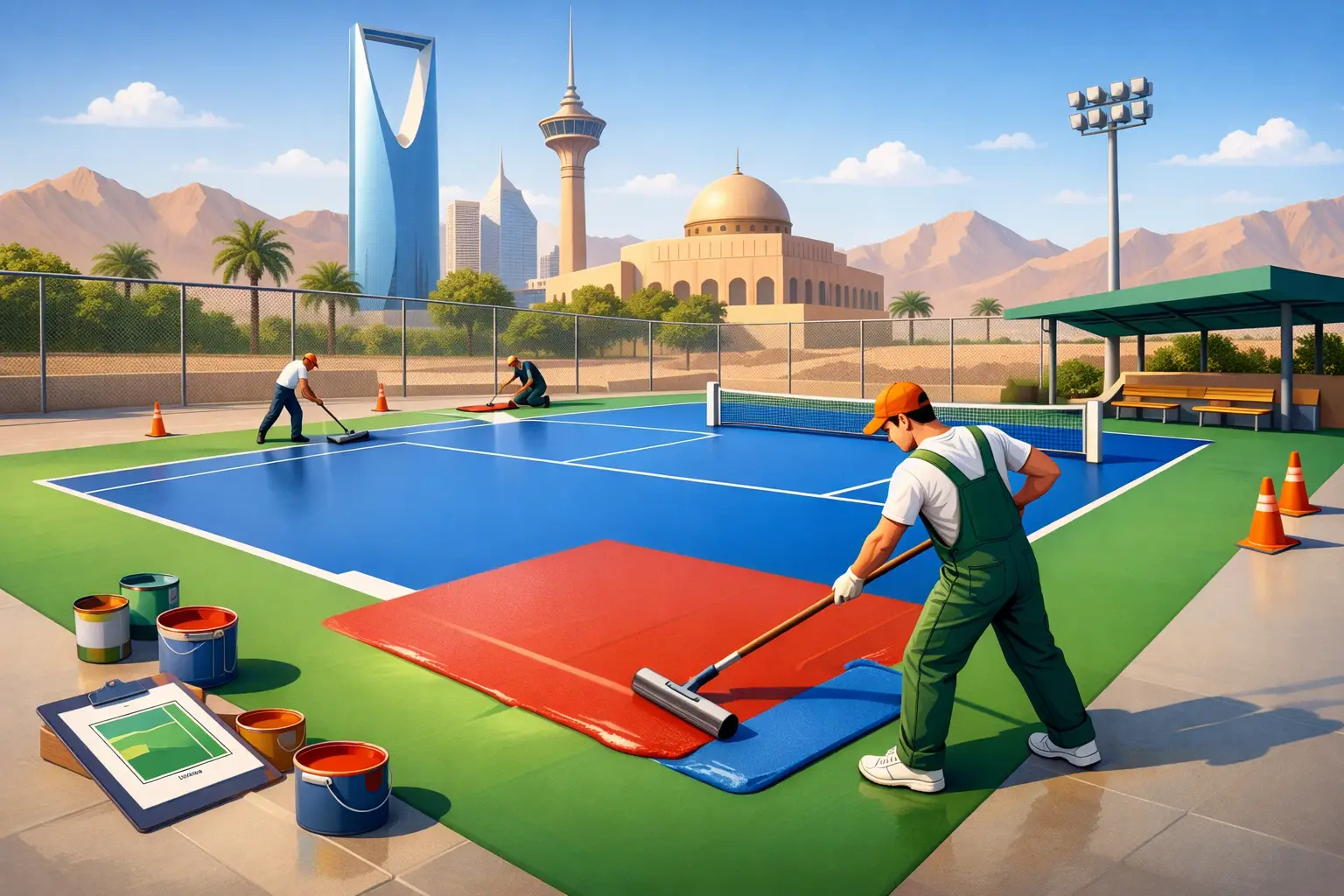
A court rarely fails all at once. It first shows up as fading color, a rougher ball response, fine cracking around high-use areas, or puddling after cleaning and rainfall. For facility operators, acrylic court resurfacing Saudi Arabia is not simply a cosmetic upgrade. It is a controlled asset-renewal process that restores safety, consistency, and the premium appearance expected of a public, educational, residential, or destination facility.
Saudi conditions make the decision more technical. Extreme surface temperatures, ultraviolet exposure, windblown sand, thermal movement, and frequent player traffic can accelerate wear when a court system has not been specified or maintained correctly. A reliable resurfacing program begins with diagnosis, then applies the correct repair and coating sequence for the court’s actual condition.
When Does an Acrylic Court Need Resurfacing?
Acrylic systems are durable, but no sports surface is maintenance-free. The timing depends on court use, substrate quality, drainage performance, cleaning practices, and exposure. A lightly used private court may retain good performance longer than a heavily programmed school or community facility. Courts near landscaped areas or open desert sites can also accumulate more abrasive dust and debris.
The clearest signal is not always visible cracking. Players and operators may notice inconsistent pace, reduced traction, worn line markings, a chalky surface, or areas that hold water. These conditions affect the experience of tennis, basketball, pickleball, and multi-sport users long before the court becomes unusable.
Resurfacing is appropriate when the underlying base remains structurally sound but the acrylic wearing layers have lost their texture, color, or uniformity. It is not the answer for every problem. Significant base movement, widespread settlement, severe ponding, or major concrete and asphalt failure must be corrected first. Applying new acrylic layers over an unstable substrate may improve appearance temporarily, but it will not deliver a durable result.
The Difference Between Cleaning, Repair, and Renewal
Routine cleaning removes dust, stains, and organic buildup. Local repair addresses isolated cracks, damaged joints, or small depressions. Resurfacing renews the full playing surface through a coordinated system of preparation, patching, texture coats, color coats, and precision line marking.
For decision-makers, this distinction matters because a low-cost coating application is not necessarily resurfacing. The scope must identify how defects are prepared, which materials are used, how surface texture will be controlled, and what inspection standards apply before handover.
Why Saudi Conditions Change the Specification
An outdoor court in Riyadh, Jeddah, Dammam, or a new destination development faces a different operating environment than a court in a mild climate. Intense UV exposure can fade low-quality pigments and weaken unsuitable binders. High daytime temperatures cause expansion and contraction in the substrate, increasing pressure on cracks and joints. Fine sand can wear the surface and reduce drainage efficiency when maintenance is neglected.
The solution is not simply to use a thicker coating. Thickness without correct material compatibility, substrate preparation, and drainage control can create its own problems. A high-performance acrylic court system should be selected as a complete assembly, with compatible primers, crack-repair materials, leveling compounds, textured layers, and finish colors.
Texture is especially important. It determines traction, ball response, cleaning requirements, and the perceived pace of play. More texture can improve grip, but excessive texture can make a court abrasive and difficult to maintain. The correct balance depends on the sport, user profile, indoor or outdoor setting, and the performance brief established at design stage.
A Precision Process for Acrylic Court Resurfacing
A successful resurfacing project is built on the condition survey. Before materials arrive on site, the contractor should assess the existing surface, identify structural and non-structural cracks, test for loose coating, review slopes and drainage paths, and inspect perimeter detailing. This establishes whether resurfacing is viable and prevents change orders driven by issues that should have been visible from the start.
1. Surface Preparation and Defect Correction
Preparation determines the bond and service life of the new system. The court is cleaned to remove dust, loose particles, contaminants, and deteriorated coatings. Damaged areas are mechanically prepared as required, while cracks are treated using repair methods suited to their movement and severity.
Low areas require careful leveling. Standing water is not a minor visual defect: it can interrupt play, collect debris, and accelerate localized wear. Where ponding relates to broader slope or base failure, the appropriate solution may involve civil correction rather than additional coating material.
2. Acrylic Layers Built for Performance
Once the substrate is sound and prepared, resurfacing layers are applied in controlled stages. Depending on the court’s condition and performance target, the assembly may include an acrylic resurfacer, cushion layers where specified, textured color coats, and contrasting line-marking coats.
Each coat needs proper curing before the next is applied. Site conditions affect this process. Heat, humidity, dust, and wind must be managed through scheduling, protection, workmanship controls, and product-specific application requirements. Rushing between coats can compromise adhesion and finish quality, even when premium materials are used.
Color selection also has operational value. Strong visual contrast helps players track balls and court boundaries, while considered color palettes support the identity of schools, clubs, compounds, and destination assets. Darker colors can absorb more heat, so the final selection should balance branding, visual comfort, and the intended use of the facility.
3. Lines, Edges, and Final Inspection
Court markings should be measured and applied with the same care as the playing surface. Inaccurate lines undermine the credibility of a finished facility and create avoidable operational issues for organized play. Edges, transitions to surrounding paving, fencing interfaces, drains, and equipment foundations should also be checked before handover.
Final inspection should confirm consistent coverage, texture, color, line geometry, drainage behavior, and the absence of surface defects. For public-sector, education, hospitality, and developer projects, documentation of materials, installation stages, and maintenance guidance supports long-term asset management.
Selecting the Right Resurfacing Partner
The right contractor is not just a coating applicator. They need the ability to evaluate the whole court environment, including civil conditions, drainage, fencing, lighting coordination, access constraints, and the sport-specific requirements of the end users.
Ask how the contractor diagnoses substrate problems before proposing a system. Request clarity on material sourcing, layer build-up, crack-repair methodology, workmanship controls, and expected maintenance. A contractor should also explain where resurfacing stops being economical and where reconstruction is the more responsible recommendation.
Turnkey capability reduces gaps between trades. When one specialist manages assessment, surface engineering, repair, installation, inspection, and future maintenance, accountability is clearer. For complex sites, StepX Sports applies this full-scope approach to help clients protect both immediate project outcomes and long-term facility value.
Protecting the Investment After Resurfacing
A renewed acrylic court should enter a practical maintenance cycle from day one. Regular removal of sand and debris protects texture and reduces abrasive wear. Gentle cleaning preserves the finish without introducing chemicals or methods that can damage acrylic layers. Prompt attention to new cracks, drainage issues, and localized damage prevents minor defects from becoming expensive repairs.
Usage management matters as well. Moving heavy equipment across a court, allowing unsuitable wheeled traffic, or using aggressive cleaning tools can shorten the life of a professionally installed system. Facility teams should have a clear operating procedure for cleaning, inspections, furniture placement, and event setups.
Acrylic court resurfacing is most valuable when treated as planned infrastructure stewardship, not a last-minute response to a worn-out surface. With the right assessment and a system engineered for Saudi exposure, a court can return to service with the safe footing, consistent play, and polished presence that keep communities moving.