
What Sports Flooring Withstands Extreme Heat?
Recent Posts
Turnkey Sports Facility Construction Saudi Arabia
July 31, 2026
Building Safer Playgrounds for Future Generations
April 29, 2026
High-Performance Sports Flooring Solutions
April 29, 2026
Share Post
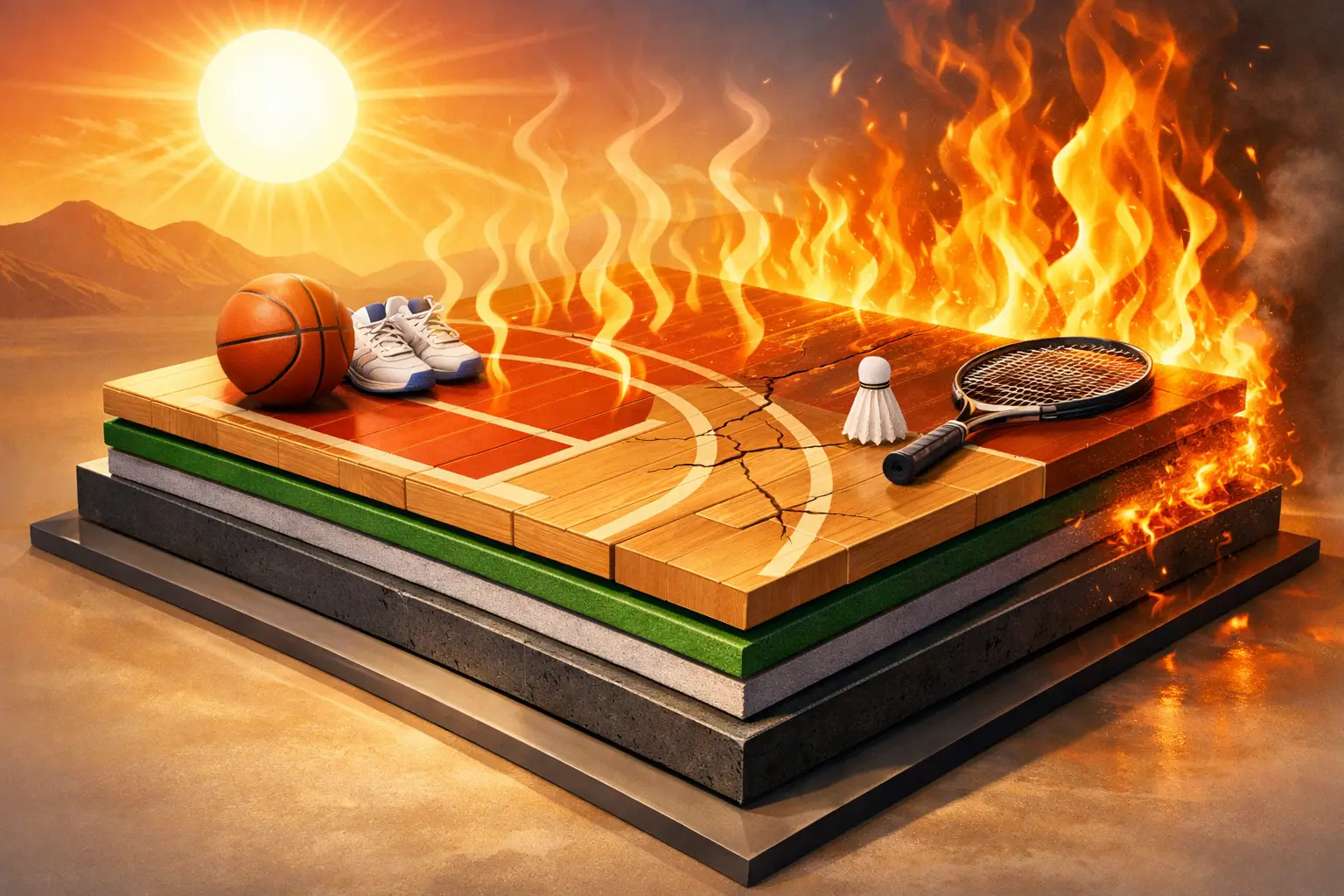
A court can look complete on handover day and still fail its first Saudi summer. Surface fading, soft binders, lifted seams, cracking, and uncomfortable underfoot temperatures are usually not material-only problems. They are the result of selecting and installing a system without accounting for solar load, UV exposure, substrate movement, drainage, and expected traffic. For developers asking what sports flooring withstands extreme heat, the right answer is a complete surface system engineered for the site, not a single product category.
What Sports Flooring Withstands Extreme Heat in Saudi Arabia?
For most outdoor sports environments, the strongest options are UV-stable acrylic court systems, EPDM rubber flooring, polyurethane track systems with EPDM wear layers, and artificial turf specified with heat-conscious fibers and infill. Each can perform reliably in high-temperature environments, but each serves a different sport, use profile, and maintenance plan.
The common requirement is material stability under prolonged sunlight. A heat-ready system must resist UV degradation, retain its texture and color, accommodate thermal expansion, drain properly, and maintain safe traction as temperatures rise. It also needs a substrate designed to limit movement and water-related damage below the finished surface.
This distinction matters across Riyadh, Jeddah, Dammam, and emerging destination developments, where surfaces can be exposed to intense direct sun for much of the year. A flooring system that performs well in a mild climate or shaded indoor facility may not be suitable for an open court, playground, track, or fitness zone in Saudi Arabia.
Acrylic Sports Flooring for Outdoor Courts
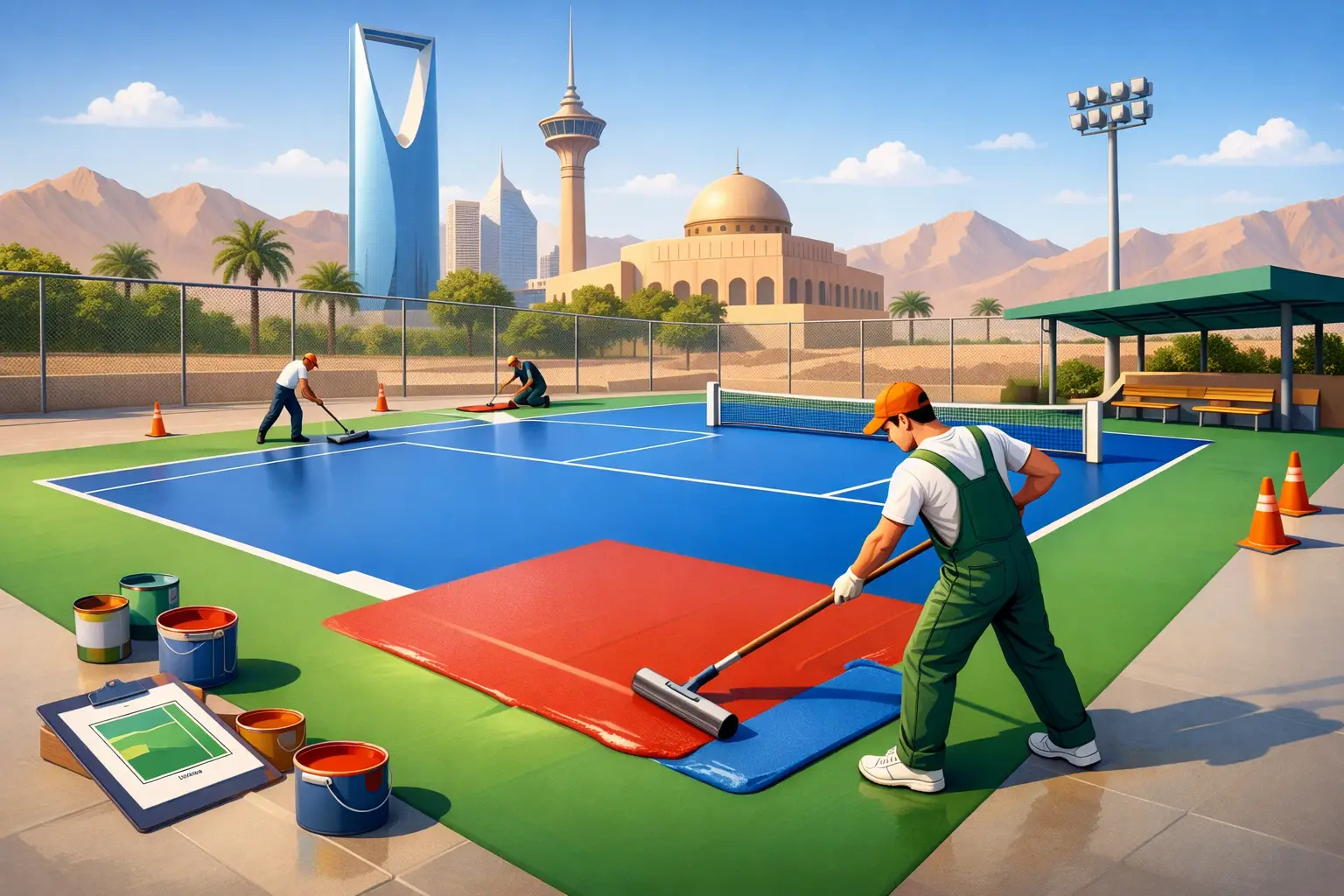
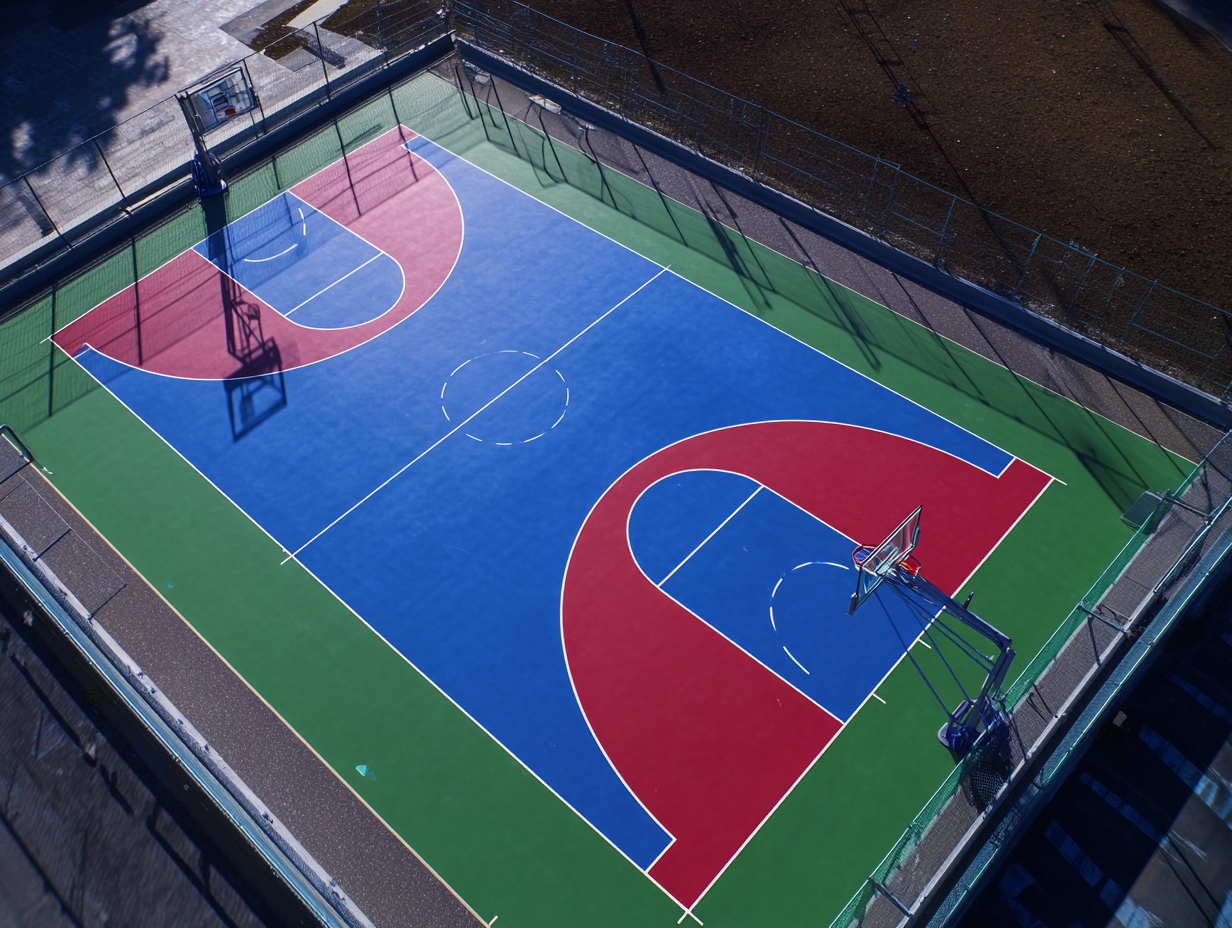
Acrylic sports flooring is often the first choice for outdoor basketball, tennis, multi-sport, and recreational courts. It is a layered coating system applied over a properly prepared asphalt or concrete base. When specified with UV-stable pigments, resilient acrylic binders, and the correct texture coats, it provides consistent ball response, dependable traction, color retention, and straightforward maintenance.
Its performance in extreme heat depends heavily on the base construction. Asphalt and concrete expand and contract differently, and neither can compensate for poor site preparation. The slab or pavement must be correctly graded, cured, jointed where required, and protected with drainage that moves water away from the court perimeter. Acrylic coatings cannot conceal structural cracking or settlement beneath them.
Color selection also affects user comfort. Darker colors absorb more solar energy and can become significantly hotter than lighter playing zones and perimeter colors. That does not mean every court should be pale. Contrast, visibility, branding, and glare control still matter. The practical approach is to balance court aesthetics with heat absorption and select a coating system designed to retain its finish under UV exposure.
For high-use school grounds, compounds, municipal parks, and public courts, acrylic delivers an effective balance of durability, playability, repairability, and lifecycle value. It is not a shock-absorbing playground system by itself, however. Where fall protection is a primary requirement, EPDM or a purpose-built impact-attenuating system is the better route.
EPDM Rubber Flooring for Heat, Safety, and High Foot Traffic
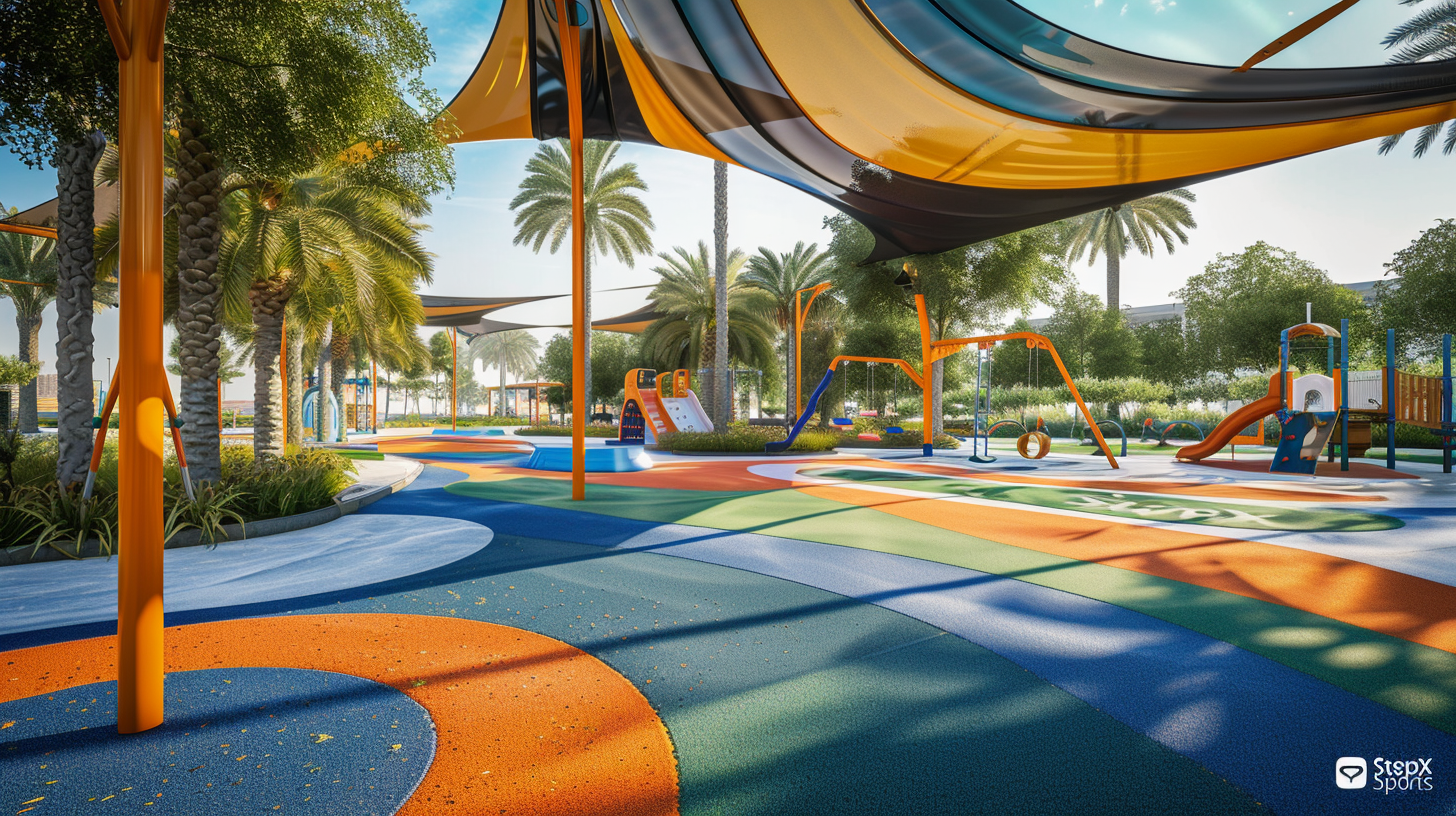
EPDM rubber flooring is a strong solution for playgrounds, outdoor fitness areas, walking zones, and multi-use recreational spaces where comfort and impact attenuation are central requirements. High-quality EPDM granules are color-stable and weather-resistant, making them more suitable for exposed outdoor conditions than lower-grade rubber finishes intended for sheltered use.
A poured-in-place EPDM system generally combines a shock-absorbing base layer with a durable EPDM wear layer. The thickness should be determined by the intended use and, for play spaces, the required critical fall height. This is a safety design decision, not a visual preference. A thin decorative rubber finish may look acceptable initially but may not provide the level of impact protection needed for the equipment installed above it.
Heat remains a user-experience consideration. Rubber surfaces, particularly in dark colors, can retain heat under direct sun. Light and mid-tone color palettes can help, while shade structures, tree placement, and site orientation can make a greater difference to daytime comfort than flooring selection alone. Designers should also avoid assuming that a soft surface will feel cool. Safety underfoot and surface temperature are related but separate performance measures.
The binder is equally important. EPDM granules require a polyurethane binder formulated for outdoor UV exposure and installed under controlled conditions. Weak binder selection, incorrect mix ratios, or rushed installation can lead to granule loss, softening, and premature breakdown. Precision installation standards protect the investment as much as the specified material does.
Polyurethane and EPDM Running Track Systems
For athletics facilities, polyurethane track systems with an EPDM surface layer are designed to withstand intensive running traffic, weather exposure, and demanding performance expectations. They provide a more controlled running surface than general-purpose rubber flooring, with the resilience, traction, and spike resistance required for track use.
There are several system constructions, including full-pour polyurethane, sandwich systems, and spray-applied finishes over resilient base layers. The right construction depends on the facility’s competition standard, athlete profile, budget, and maintenance capability. A school training track does not necessarily need the same specification as a competition venue, but both require UV-resistant materials and a stable, well-drained substrate.
In hot conditions, track performance is protected through correct layer thickness, compatible primers, outdoor-grade binders, and disciplined curing procedures. Installation timing also matters. Applying materials during unsuitable substrate temperatures or uncontrolled weather conditions can compromise bond strength and finish quality. This is why experienced site supervision is essential on large outdoor installations.
Artificial Turf: Durable, but Manage Surface Temperature
Artificial turf can withstand extreme heat when it is built from UV-stabilized yarn, suitable backing, durable stitching, and a correctly selected infill system. It is widely used for football pitches, training fields, landscape recreation zones, and multi-use activity areas because it supports high usage with a consistent appearance.
However, turf should be specified honestly. It can become hot in direct sun, especially where dark infill and dense fibers absorb heat. Heat-reduction yarn technologies, lighter infill choices, irrigation strategies, and shaded seating areas can improve comfort, but none eliminates solar exposure completely. For facilities used at midday, operational planning may be as important as the turf specification.
The base system is critical. Compacted aggregate layers, correct levels, perimeter restraints, drainage, and properly joined seams allow the turf to remain stable as the ground responds to temperature and moisture changes. Poor drainage can create more than a maintenance issue. It can destabilize the base, affect play quality, and shorten the surface’s usable life.
For football, a turf system should also be designed around the intended level of play. Pile height, yarn shape, infill depth, shock pad requirements, and ball-roll expectations must work together. Selecting turf only by its appearance or fiber weight is not sufficient for a long-term sports asset.
The Base Construction Determines the Surface Life
Extreme heat places stress on every layer, but the surface is only as reliable as what sits beneath it. Across courts, tracks, EPDM zones, and turf fields, recurring failures often begin with inadequate civil works: weak compaction, poor falls, insufficient drainage, unstable edges, or an incompatible primer and substrate combination.
A high-performance specification should evaluate site levels, soil conditions, drainage routes, expected loads, and the movement characteristics of the proposed base. Concrete cracks must be assessed and treated appropriately. Asphalt must achieve the required density and smoothness before coatings are applied. Turf bases must be compacted in controlled layers and graded to prevent water retention.
This is also where turnkey delivery adds value. When one specialist team controls design coordination, material selection, civil preparation, installation, inspection, and maintenance planning, the project avoids the gaps that occur when each trade assumes another contractor is responsible for surface performance.
Select for the Facility, Not the Product Brochure
The best flooring choice depends on how people will use the space. Acrylic is the practical standard for hard-court play. EPDM is suited to impact safety, outdoor fitness, and play environments. Polyurethane track systems support running performance. Artificial turf serves football and high-use field applications. In many developments, the strongest result is a coordinated combination of these systems rather than one surface used everywhere.
StepX Sports approaches surface selection as an engineering decision tied to sport, climate, safety, maintenance, and the expected service life of the facility. Certified materials matter, but they must be installed over a base that is built for Saudi conditions and verified before handover.
A well-specified sports surface should still look deliberate after years of sun, foot traffic, and active community use. Start with the people who will use it, design every layer around the site, and treat heat resistance as a performance requirement from the ground up.